
Talking with Christina MacSweeney
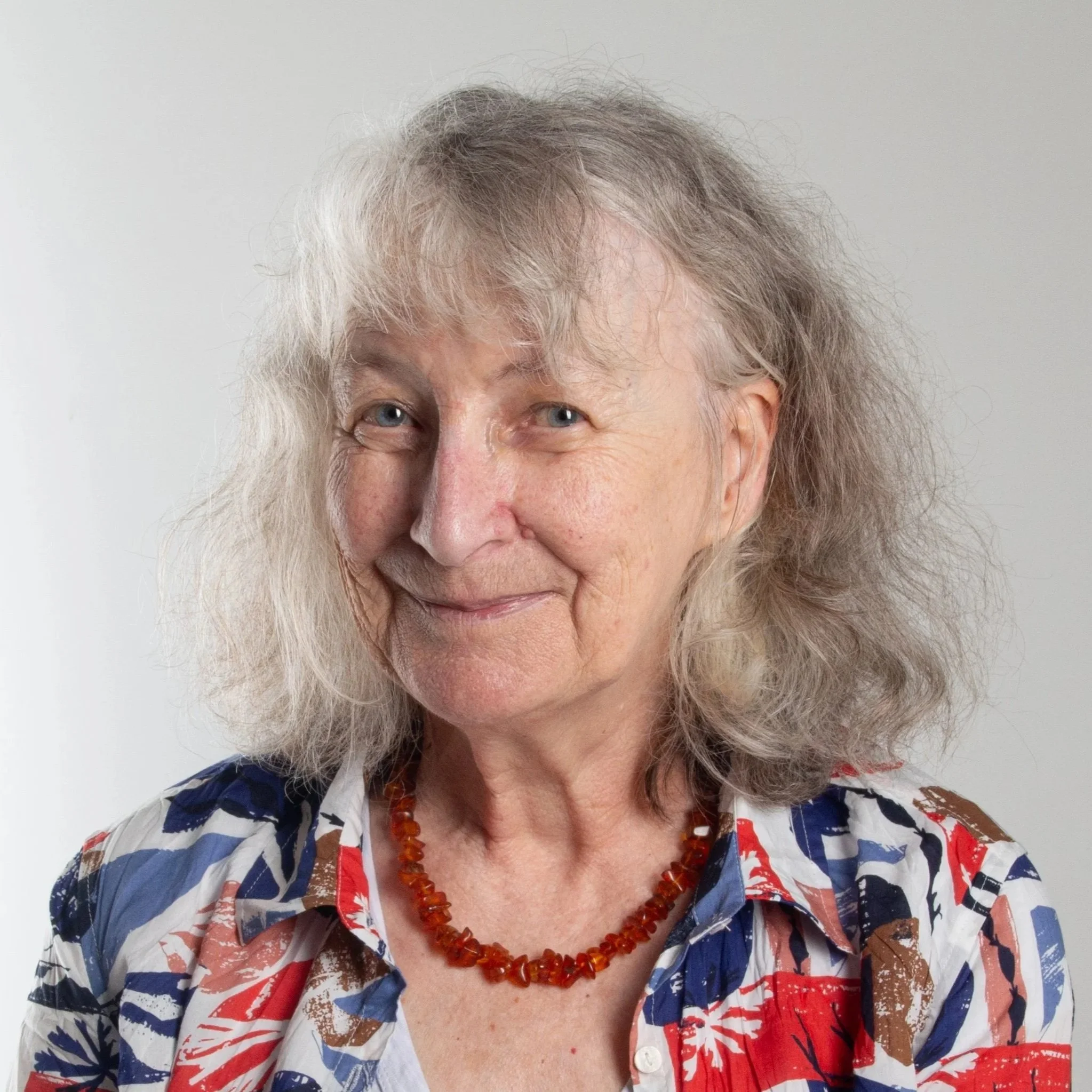
Kate McNamara and
Katia Treviño talk with Christina MacSweeney about her translation of Cristina Rivera Garza’s Autobiography of Cotton (And Other Stories, 2026).
We discuss the proactive role of the translator, the freedom and space for creativity in that movement between languages that translators work with, and friendship through translation, as well as the work of translating a text that moves swiftly between genres.
Katia Lizeth Treviño: Christina, thank you so much for meeting with us today. To begin with, we wanted to ask you how you became a translator and what keeps you coming back to translation?
Christina MacSweeney: Thank you for inviting me. It's a pleasure to talk to you. I think I came to translation really as a reader. I'm one of those people who read everything from the word go. I did a few years Spanish at high school. Later, I lived in Barbados for a couple of years and I studied Spanish again there at the Venezuelan Cultural Institute. While I was in the Caribbean, I travelled in Mexico and Guatemala, and at that point I was beginning to read in Spanish as well. I remember the first book I read straight through in Spanish was Leyendas de Guatemala by Miguel Angel Asturias. Eventually I went to live in Venezuela. I was there for 10 years, so I had access to all the books I wanted in Spanish.
I got particularly interested in writing by women because I'd already realized that there seemed to be very few female Latin American writers being published in translation – Isabelle Allende, and that was it. So I really had such a wonderful opportunity to get to know other writers then. I started by translating some short stories by Silvina Ocampo: her work was out-of-print at that time, but I found an autobiographical study with about ten of her stories. So that was a really good place to start.
When I returned to the UK from Venezuela, I studied the Master’s in Literary Translation at the University of East Anglia, which expanded my sense of what is involved in translation and offered space for creative practice. It also introduced me to the larger translation community.
Kate McNamara: So there was always a focus on women’s writing for you?
Christina MacSweeney: Yes. Before I went to Venezuela, I went back to university and I did a degree in Communication Studies and Sociology, and I managed to write a sociology thesis on Latin American literature [laughter]. This was at Goldsmiths and if you could justify it, you could do it! I was looking at 100 Years of Solitude and The House of Spirits and discussing the similarities and differences. So that interest was there already even before my travels.
Kate McNamara: That's lovely to hear. This is the first work by Cristina Rivera Garza that you have translated. How did you become the translator for this particular book?
Christina MacSweeney: By very good luck. I'd read her work before and was a big fan. I'd met her once as well before we started our work together on this book, it was at the launch for an anthology that she was in and I’d translated something for. I think the good luck came because Graywolf, the publisher in the United States, bought the rights to Autobiografía del Algodón, and I had already translated several works by Julián Herbert for them. He’s a North Mexican writer and one of his books is cross-genre historical/reportage work. It’s called The House of the Pain of Others and it’s set in the time of the revolution in Northern Mexico so I think Carmen Giménez [at Graywolf] thought I had some Norteño background, and she wrote to ask if I would be interested. I had already read Autobiografía del Algodón by then so, yes! I definitely was. It was quite a surprise because however much I like Cristina’s work, I'd never really thought of trying pitch a translation because she was already working with Sarah Booker, so it was an honour to be asked.
Katia Lizeth Treviño: It's really nice to hear that you had read the book before you were even approached. That must have been a very nice coincidence for you.
Christina MacSweeney: Yes, it was because I really did enjoy it. The book opened my eyes to so many things I didn't know about in Northern Mexico, for instance that cotton was grown there! I think I did vaguely know that cotton was grown somewhere in Mexico, but in your imaginary world, you see it on the other side of the border – on plantations, in Hollywood movies, slavery.
Katia Lizeth Treviño: Yes! I'm from Northern Mexico and I also never thought of it until I read the book. So I think it is not common knowledge, at least not in recent generations, so it was really great to read something that was fiction but that was also very historically accurate about the region. It’s also lovely to know that you were already a fan of Cristina’s work.
There are themes in Cristina’s writing that she keeps returning to: violence, disappearances, and borders, for instance. She has also said that she likes to play with some of her characters, having them jump from one book to another, or used the concept of “twin books” where she has a more fictional version of a non-fiction book in her work. It was recently announced that you are the translator of Terrestrial, which brings back Xian, who is a character from her first short story compilation. I am interested to hear about your research and preparation for the translation process: did you read anything else by Cristina before or whilst you were translating this book? How necessary and how helpful do you find it to read around the books that you are translating?
Christina MacSweeney: yes, I did, but more for Terrestrial than Autobiography of Cotton. I think that Autobiography of Cotton is so different – it really is different from her other works published in English translation, and as you say, so much of it is factual, and then she builds the picture of her family into it, and the writing there becomes more fictional. So I came to Autobiography of Cotton with a clear mind, ready to see how I could deal with it, what I could do with it. That said, I did have to do a lot of research for the book on all sorts of subjects, like the agricultural process of cotton cultivation. It was really interesting to know about the life cycle of the cotton plant. Oh, and also on the construction of the dams! I am now an expert on dam construction. [laughter].
I also learnt about the ecological consequences of dams, and the cotton industry. I had never thought about it because you start off in the book thinking isn't this wonderful, all these people are being given land and are able to make a living for the first time but then the consequences to the whole ecology of that area become clear, and it's deeply saddening, isn't it?
When it came to research for Autobiography of Cotton, one of the main texts I drew on was José Revueltas’ novel El luto humano, translated by Roberto Crespi as Human Mourning. This work is referenced throughout Cristina’s book. So I was working with the Spanish and an excellent English translation. One thing I had to be aware of throughout was when it was José Revueltas speaking rather than Cristina. And so moving between those two texts and balancing the English was challenging at times.
Katia Lizeth Treviño: You read the book first as a reader and then you had to reread it as a translator. Would you be able to talk to us a little bit about that? Was it a very different experience?
Christina MacSweeney: It is and it isn’t. I'm sure every translator would give a different answer for this. There’s something I do that I only recently realized isn't common. When I'm reading, I subvocalise. That means as I'm reading, I'm listening to the text in my head. I thought everybody did that until I got these strange looks when I tried to explain it. So, to an extent when I'm reading, I'm already hearing voices. I'm constructing voices and rhythms. They are already there for me. But when you come to the actual translation then you're going much deeper and refining those voices, tightening those rhythms.
As far as process goes, I usually do a first draft which is full of options and choices highlighted in different colours where I'm thinking about things. Just really getting something on paper. With Autobiography of Cotton, I did that, and then read it through an made corrections by hand on the hard copy, still working alongside the original text. In this case, I then sent Cristina a whole list of questions that I had in relation to the text. We had agreed on that way of working, and she was really good about getting back to me, even to the extent of going to her father and ask him what very specific vocabulary actually meant, because these words did not exist in any dictionary! I think brecha was one of them, which is a lane between the cotton fields. So that had to come from her father. After that I do third and fourth drafts where I feel I have more artistic freedom.
Kate McNamara: That's amazing. What an exciting challenge for a translator when words don’t exist in a dictionary! I wanted to talk with you about the genre of the book. Autobiography of Cotton has been called a novel by Cristina Rivera Garza, but really it is formed of a range of genres and is in large part a non-fiction book. It uses a depth of careful research to create a historical narrative woven with philosophical insights which is then combined with fictional imaginings to find a way to tell the story of her maternal and paternal grandparents as they migrated from the mining towns to the cotton fields around the Mexico-US border. In the sections describing the movements of her family, we read details that must have been lost to time but are resurrected to memory through Cristina’s writing. There are some beautiful passages in the book that grapple with the relationships between history, memory, fiction, and with how to write about people’s lives that she (and you!) wrote. I highlighted this section:
Is there any way to honour those lives … without making them the subject of rumor, material to be studied, a story shared without permission? Is it possible to forge ways of talking about them, about those lives, without betraying well-kept secrets, whether they be kept consciously or are due to forgetting or distraction?
Better to lower your voice.
Be silent for a while.
Advance with great care.
Sometimes a book is a form of return: a refamiliarization and a reparation. The conversation that starts up again after years of silence.
Christina MacSweeney: Isn’t it beautiful?
Kate McNamara: It's great, yes.
Christina MacSweeney: That piece particularly moved me when I was translating because I come from an Irish family and so the rest of the family is over there in the south of Ireland, in the Republic. My mum and dad moved to England in the 1950s. We went back to Ireland every summer but there were a lot of family stories that we knew nothing about. As we got older, we managed to find out about some of the stories. But, as Cristina said, sometimes relatives don't particularly want to talk about stuff from the past. I didn't know my paternal grandfather because he died before I was born and so all I had was a photograph of him. He was headmaster of a very poor school, In the photograph, a lot of the children didn't have shoes. And then I found out only just a few years ago that he wrote speeches for Michael Collins during the uprising! You just think, how come nobody told us…? It's incredible that those kinds of stories remain silent. So that particular passage really struck home to me.
Kate McNamara: I wanted to ask what it was like for you to translate a work that moves so swiftly between genres, and one that is also so tied into the intimate, familial history of its author? How does it affect you to take on and rewrite Cristina’s words?
Christina MacSweeney: Well, moving between genres, over the last few years, has become much more common in Latin American literature. It's unusual to find a book that doesn't! I think it’s challenging in a good way; it keeps you on your toes, or your fingertips!
I did find translating the book quite an emotional experience in places, and you become attached to the characters, the wives in particular. They were just amazing. I love the scene when Regina and José Maria are in this hotel, with this flu going on all around them; that's such a gorgeous section that I assume is all fiction.
Kate McNamara: This is what I found fascinating about Autobiography of Cotton, that these must be fictional moments, but based on fragments of truth, of history that have survived. And it’s not at all clear how much of the narrative is based on family stories or documents that have been kept and how much of it is fictional, using invented narratives to weave these remaining fragments together to create the story.
Christina MacSweeney: I think that bringing in José Revueltas as a character in the book really brought so many elements together. A lot of the of the titles of the fragments come from Human Mourning. So that was, I believe, a master stroke… a mistress stroke. [laughter] In the epilogue Cristina says that Revueltas’ novel was actually suggested to her as a book to read if she was thinking of doing research about her family in northern Mexico.
Katia Lizeth Treviño: We usually like to ask translators about their relationships with the authors. You mentioned that you agreed with Cristina that you were going to send a list of questions for her to answer. Was anything in the answers that she sent to you that were particularly useful or surprising?
Christina MacSweeney: There's the whole section with the telegrams and that really had me pulling my hair out trying to work it all out because they're so different. Some of them are extremely formal, in a very stiff syntax. Then you've got others that are so impassioned and full of spelling errors and mistakes. I'm old enough to have come from a generation where a telegram was something that existed and had a set format that you used, but it was the headings! They were just incomprehensible. In the end Cristina said to leave them as they are, not to worry about them as she doesn't know exactly what they mean either.
Katia Lizeth Treviño: There is this one telegram where ‘revolución’ it's written with a B instead of a V. And I remember that in the Spanish they corrected it on the text, but I noticed you left it, and I really liked that you had kept that misspelling.
Christina MacSweeney: That V/B thing – I know when I was in Venezuela, in a lot of the historical writings, Venezuela was written with a B. Did you understand the telegrams, Katia?
Katia Lizeth Treviño: No, I did not. Rather than what they actually said, I think they were setting the tone and creating an understanding of the different parties. Some of them were, as you said, very formal, the spelling was right. And then you had others, perhaps from farmers whose spelling wasn't great. And it was nice to see the contrast between the different kinds of parties involved in the protests. But I also did not understand them all!
Kate McNamara: Christina, you have spoken with gratitude and fondness about your relationship with other authors that you have translated, such as Elvira Navarro, Jazmina Barrera, and Valeria Luiselli. And you are spoken of with fondness and gratitude in return! Translation is often spoken of as a solitary pursuit but, reading about your work, it seems like translation for you is actually quite a social experience, with deeply nourishing relationships. In public emails between yourself and Jazmina Barrera (which are wonderful to read), you discuss the connections between translation and friendship: “translation at its best is a work of friendship, it involves many of the things that form the foundation of friendship.” I found this a beautiful notion, and admire the way that relationships seem to develop around the process of translation for you. Would you talk to us a bit about your experiences of translation and friendship, or friendship through translation?
Christina MacSweeney: To take the first part of your question–translation is a solitary act. You're just sitting there alone, and I remember during COVID and the lockdown, people were complaining and I was just thinking, no change! But one of the things that I think is fundamental to my approach is to have respect for the text and for the author of that text. I never want to violate it in any way. And if I think about what it must be like to be an author and have your work translated…I mean it seems like it could be an awful intrusion. It's quite frightening. So my feeling is always that I want to come to the task with that respect for the author and let them know that I'm not going to do anything just because I feel like it. If I don't like a book then I won't translate it. That's my feeling. But yes, I think translation somehow does create a relationship that you gradually build up because both sides have to respect each other and you get to know the other person well. When you are deep in a translation, you are also deep in that author's thoughts and feelings and emotions, and you in turn have to be open, and allow yourself to be a little vulnerable. So I think it's an organic process that builds up naturally. And with Jazmina, I had read her work before she was published in English so we'd had a chance to build up a relationship even before we started on the translation. But with Valeria Luiselli, the friendship was quite spontaneous.
Katia Lizeth Treviño: Thank you for sharing that, it is very nice to hear. I read the book in Spanish – Autobiografía del Algodón – when it came out a couple of years ago and revisited it very recently through your translation. I really liked it. I think I've read a couple of Cristina’s works in translation and I think this was very, very true to the original. I kept catching myself highlighting the same passages in English and Spanish.
I am very curious to ask how you approach decision making in your translation, when it comes to deciding which words will stay in the original language. There was the word ‘rancho’: I noticed that you translated it as both ‘farm’ and ‘ranch’, while in the case of ‘rancherías’, you kept the original Spanish. And I was wondering about your process of making a decision when you encountered that word throughout the book. More specifically, I am curious to know how these choices relate with your relationship with the readers of the book. Do you think about which word will best help readers grasp the tone or meaning of a passage? Or are your decisions more based on what feels right to you on a more personal level with the text?
Christina MacSweeney: I'm always thinking of the reader because there are going to be times when you want to keep a word in Spanish, but you're going to have to do a little bit of explication just to do that. This translation was done originally done with Graywolf Press for an American readerships and ‘rancheria’ actually exists in the Merriam Webster dictionary, which is the main one I use for American English. So the term exists and I didn't feel like putting ‘village’ or ‘hamlet' or something like that, which just doesn't conjure up anything Mexican. I have a thing about ‘rancho’. I don't like retaining it in Spanish because the meaning is so vague and can have very negative connotations; when I was in Venezuela the ranchos were the slum houses going up the hillsides. So I think decisions have to be based on what you feel is going to make the meaning clearer for readers. Words exist in context, and so the relationship isn't always that linear dictionary one. It’s important to keep the context in mind. What other words are being used in that paragraph, that chapter? Do you want to repeat the same word? Things like that. Cristina will often, as a stylistic trope, string together little groups of three or four words with very similar meanings, and it is often almost impossible to do exactly the same thing in English, a language that doesn’t like repetition. So as a translator, I want to be thinking about what I can do to try to keep that rhythm going within the text.
One of the words I loved keeping in Spanish in this book was ‘mueble’ for car – gorgeous. I had to put in a whole little explanation to keep it, but I thought that was such a lovely thing to have in the English text.
Katia Lizeth Treviño: And it's also a word that people only from the generation of when the story was set, or from a specific region would use. So, it was really nice to see it.
The first couple of passages of Autobiography of Cotton really transported me to the vegetation of northern Mexico. I'm a biologist, I work with plants. I know that Christina's father is also in the natural sciences, and I wonder if maybe that is a reason why she brings many botanical elements to her books. When you encountered the names of plants, some of them you translated and others you kept in Spanish. For instance, you kept in ‘anacahuita’ (‘Mexican olive’) and I found it really compelling to read it in your English translation because it is the flower of my state, so it is a tree that I'm very familiar with and seeing it in a book, especially in a translated book in English, was really nice. In fact, I didn’t even know that it was called Mexican olive until I was doing research for this interview. Could you tell us a bit about how you use your work and decisions about what to translate, to draw us into the landscape?
Christina MacSweeney: It's another area of research. I think you have to try and find out as much as you can. The María Moliner dictionary has a wonderful glossary of common and botanical names. So I would try and find the botanical name and then do my best to research the environment in which you're likely to find the plants to find a common name that would fit.
But if I think about that area of Northern Mexico, the ecology changed over a period so that it was desert at one time and then came the dams and the irrigation systems, so suddenly there must have been many new plants growing there. So it was a bit difficult to know just what the exact term would be, but I did my best.
Katia Lizeth Treviño: I thought it was great. Yes, and it's interesting that you say that this translation was mainly intended for North American readers.
Christina MacSweeney: Yes, but when And Other Stories decided to publish Autobiography of Cotton, I talked with Stefan about this because we were thinking about how we should approach anglicizing the book. In the end, because so much of it is rooted in Northern Mexico, we decided that we would just change the spelling and punctuation and leave everything else the same. So the book maybe comes across as slightly less domesticated than usual for UK readers.
Kate McNamara: I'm fascinated by the idea of translating texts again between different readerships in English.
Christina MacSweeney: Yes, it's almost like a three-way process translating for American readers.
Katia Lizeth Treviño: It was really great to hear earlier that one of your introductions into translation was reading Latin American female writers. It’s way more common now to find Latin American female writers, both in Spanish and in translation.
Cristina is not the only woman in contemporary literature in Mexico or Latin America writing about violence towards women. It is such an intimate yet widely spoken about topic. I have been reading a lot of these texts in recent years, including ones by the Mexican poet and novelist, Clyo Mendoza, who you have also translated, publishing Fury in 2024, and Silencio, which comes out in August this year. Is translating these types of works something that you have chosen, that you are specifically interested in? Do you think that even though you are translating different voices, through the act of translating similar topics and similar landscapes, you start creating a language of your own for them?
Christina MacSweeney: I'll start at the beginning. I’ve been a feminist since I was about 12, so I've got a whole life of different feminisms. It was always very important for me to read female writers. In Latin America, violence against women… it's rife and in society there are these attitudes that seem to justify it. Even the language itself –“madre” has negative connotations, but when you say “qué padre” it means brilliant! It reveals that there's this underlying social normalisation of that violence. I'm just thinking on the hoof here – but if you go back to Octavio Paz and The Labyrinth of Solitude, those essays are really quite misogynist, with very, very introspective men who can't express their emotions. That underlay a lot of men's thinking in Mexico for a long time.
But the ways that the authors I work with portray or address violence are all so very different that I don't think I could say that I have created a single language for it. When you look at Clyo Mendoza in Silencio, it's heartrending, but the way that she expresses herself is very different to, say, the way Jazmina Barrera expresses Octavio Paz's violence towards his wife Elena Garro. So I don't think I’m sequentially addressing this sort of violence in a way that I could construct a particular vocabulary.
Kate McNamara: You've said that you gravitate towards female writers, but you ended up translating Autobiography of Cotton because it was presented to you rather than you actively seeking it out. I'm sure that happens more and more because you're so established now and so respected. How often do you get to choose which books you want to translate? How important is it for you to translate specific authors or specific books?
Christina MacSweeney: It really does vary. I know when I talk to some translators, I'm surprised that it's nearly always publishers who come to them and regularly ask them to translate books whereas for me it has been quite varied. My first significant translations were with Valeria Luiselli, and that came to me really by chance. Another of these great good luck things – I was emerging as a translator and doing everything I could. to help that emergence. I used to do a lot of reader reports for publishers, including Granta. Apparently, they had an editorial meeting, and there was uncertainty about whether or not to buy the rights to Valeria's first work Los ingrávidos, which became Faces in the Crowd. They'd had mixed reader reports about it, so one of the editors suggested asking me if I could write a report in about three days, and I just was amazed by the novel. I fell in love with it and so knocked out my reader report as quickly as possible, and said, "Can I give you a sample translation?" And that was it! It was extremely nice, coming quite out of the blue.
Kate McNamara: Absolutely. What an amazing author to start with.
Christina MacSweeney: I know! Other writers I work with, Julián Herbert for example and Daniel Saldaña París, they both involved me going around telling people about their work, doing samples, etc. And Jazmina’s work as well – I introduced her to Two Lines Press in San Francisco. That was after they had approached me to translate Elvira Navarro. So it really does vary.
Kate McNamara: Oh wow. Well thank you for introducing Jazmina Barrera to Two Lines Press because I really love her work. Her book Linea Nigra is one of the best things that I have read on motherhood. I loved it. So thank you for bringing her to us in English!
To return to Cristina Rivera Garza – she says that she will often rework her books through the process of them being translated into English, and that translation has become a central part of what she does as a writer, particularly through its capacity to ‘un-finish’ a work that is apparently complete and finished. The act of translating a piece of writing not only opens it up to new possibilities and new forms through its crossing of linguistic and spatial borders, but it also shines a light on the fact that a piece of writing is always a shifting, changing thing. That there is no single, stable identity for a book.
We were thinking about this in relation to your own approach to translation. We are very intrigued by the creative freedom involved in the act of translation, and imagine it must be quite terrifying as well as amazingly open. It’s quite mind blowing when you think about it, how the process of translation can fundamentally alter the original text even whilst staying faithful to the original. For example, The Taiga Syndrome in English feels very different from the Spanish, and even Cristina Rivera Garza herself has said that when the book came out in English it was received as a work of ‘psychological suspense, horror, and dark-fantasy literature’, whereas in Mexico it was not perceived that way when it came out.
We would love to hear more about how you approach that freedom in your translation work?
Christina MacSweeney: It depends on the author and on the relationship that I have with that author. I think it also has to do with texts themselves. There are texts which, in their original language, leave space – they're open to creativity – whereas other texts they're more closed. It isn’t a negative reflection on them, I just think there are texts that leave space for creativity in that movement between languages.
And sometimes the author can be involved, as Cristina is and Valeria very often is. For instance, Valeria saw the translation of Los ingrávidos/ Faces in the Crowd as a way of doing almost a second edition of the book. If you compare the Spanish and the English, they're completely different in places! We worked by email mostly, exchanging comments track changes on the document, and sometimes she'd just write a whole new paragraph in Spanish or she'd put in a note saying think about doing XYZ and so I'd say how about this and…. So it worked like that, going backwards and forwards, and that’s because Valeria felt the movement between languages gave her the freedom to rework the text.
With Jazmina we also communicate a lot as we go through the text. I don't know, though, if she thinks about it as a second edition. With Julián Herbert, I communicate with him in Spanish mostly and I ask my questions and he writes these beautiful mini essays – they are so gorgeous – explaining whatever it is that I don’t understand. And that, in a way, is a creative process. You're thinking the thing through together, thinking how you can recreate it in another language.
And there are also other things you can add to the work. For The Story of my Teeth, for example, I created a completely new chapter, “The Chronologic”. In the novel, a lot of the characters have the names of real people. In fact, most of them do. The majority are literary or artistic figures from Latin America, but the names are assigned at random. They don't represent real characters in the book, if you see what I mean. So I thought that many UK readers weren't going to have the faintest clue who some of people were and so they would miss out on that whole idea of this randomness being a critique of the importance of the name, particularly in contemporary art. So I created "The Chronologic” which has a timeline of the life of the main character, Highway, and then along the timeline there were these hubs where each and every person mentioned in the book had a biographical entry of some sort or another. And they were completely random things! Like when Laia Jufresa learned to ride a bicycle in Wisconsin [laughter], but it fitted with the book, and it also meant I could say “the writer Laia Jufresa” so I could get across the idea that there’s a real person there.
Kate McNamara: When you get into these amazing conversations around the process of translation, have you ever thought about publishing those in any form? Perhaps as a companion to the book?
Christina MacSweeney: Not really. With Clyo Mendoza, because her writing is really to do with oral literature, I thought it was going to be important to talk about the processes of oral literature. Unfortunately, anything that doesn't look quite right in a book is often put down to translator error. And in Furia, there are oral histories that contradict one another, and I thought it was important to explain that. So I did write a prologue for Furia and I was asked to write a short epilogue for Silencio as well.
Kate McNamara: I wish there were more translator’s notes in the world because I love hearing about the process so much.
Katia Lizeth Treviño: I love them as well. Yes.
Christina MacSweeney: Maybe I'll think about doing it!
Kate McNamara: Please do!
This is a question I love to ask people, but I'm particularly excited about asking you. It is about music and sound. We often ask translators whether there is a soundtrack to the books. In a previous interview, you have spoken about how important music was for your translation of Valeria Luiselli’s Faces in the Crowd. There isn’t a lot of music in Autobiography of Cotton, and in fact there is a section that emphasises its absence. Cristina writes of the meeting of her relatives, Cristino Garza Peña and Emilia Bermea Arizpe, at a dance where neither of them were able to actually dance, and so both just stood there, awkward and motionless:
Nobody in their respective families had bothered to teach either of them any dance steps. Nobody had made them sharpen their ears in front of the radio to catch the rhythm of some song.
And while there’s a suggested lack of music here, I also love the idea that Cristina introduces, that you need to sharpen your ears to be able to catch rhythms of a song and know how to dance to it. So I wanted to know whether there was any music that felt important to your translation of Autobiography of Cotton? And is there often a soundtrack to your translation work that leaves its remnants in the rhythm of the final text?
Christina MacSweeney: If there's music in Cotton, it's the hoof beats of José Revueltas’s horse, as he's crossing the landscape, the trundling of the wagons as they ate going along, and the inhabited footprints. It was the sound of movement.
For music, it does vary. With Valeria, if I hear Leonard Cohen's version of Take This Waltz, it takes me right back to that translation of Faces in the Crowd and The Highwaymen. With Julián Herbert, maybe the sounds of Northern Mexico are really there, and rock and roll! It does vary. I think with the subvocalisation that I do, it's like a music that's going on a lot of the time.
Katia Lizeth Treviño: I love the subvocalisation that you're talking about.
We are building an online bookshelf of books recommended by translators with the hope that one day it will become a Translator’s Library in some physical form. To do this, we always ask the following questions to the translators in our interviews: Is there a piece of writing that has guided you during your translation work, or a text or an idea that you keep returning to?
Christina MacSweeney: If I think the one book that I seem to go back to often when I'm translating is Walter Benjamin's Illuminations. I've got a really old copy of Harry Zohn’s translation, and it's so dog-eared and underlined. It has been everywhere with me. Benjamin has been very influential in Latin American thinking, particularly within the arts, so you often find references to the essays in Illuminations and I'm often going back to the book to check out the references and find my quotations. In the prologue to Clyo Mendoza's Furia, I used his example of “The Storyteller” to talk about oral literature; it was a way of thinking that through. I'd be lost without that book! I really love it.
Kate McNamara: Perfect. It'll go straight on our shelf. And is there any book that's been translated into English that you'd recommend for people to read a book that hasn't been translated into English that you think should be?
Christina MacSweeney: One that I read recently was Gabriela Cabezón Cámara’s We Are Green and Trembling, translated by Robin Myers. It was on the longlist for the International Booker this year and I just thought that was tremendous. I really did. The whole setting was so evocative. There's a lot of poetry in it, and Robin Myers often does poetic translation. I really thought it was great. I was listening to an online panel discussion that Robin Myers took part in for the British Centre for Literary Translation, moderated by Charlotte Whittle, and she was talking about language, about being a guest in a language, which I thought was a really fascinating idea – that feeling of being invited into the language, and behaving as a guest in it. I think that comes across in her translations.
Kate McNamara: One of our In Other Words team also listened to that discussion, and he mentioned another idea that Robin Myers spoke about – rapturous curiosity – which is a beautiful concept, and really caught our attention.
Christina MacSweeney: Yes! Yes, that's lovely.
And for the writer that hasn't been translated, I have been on a quest for years and years on this one. It is the work of Victoria de Stefano. She became a friend when I lived in Caracas. She sadly died a few years ago. And I've tried very hard to get her work into English language, but it just hasn’t happened. Perhaps that was because of being an older woman? She’s a beautiful writer. Historias de la marcha a pie is a wonderful stream of consciousness novel, and another of my favourites is Lluvia or Rain. I did translate an extract from Historias for the anthology of Venezuelan literature, Crude Words.
Kate McNamara: Amazing. I'm really surprised that someone like you could go to a publisher and say this is incredible and they don't listen.
Christina MacSweeney: Well, thank you. I think you overrate our influence out there! And it’s also to do with money.
Kate McNamara: I suppose, yes. Of course there's a lot more involved in publishing than just beautiful writing. It's also about the potential marketing of it as a product, and what can make money. Well good luck with your work with Victoria de Stefano. I really hope that somebody picks it up and I can read her in your English version one day.
Christina MacSweeney: Yes. Look out for it!
Katia Lizeth Treviño: I'd never heard of her, but I'm definitely going to get a copy of her work in Spanish. Well we’ve come to the end of our questions, Christina.
Christina MacSweeney: I do want to say thank you. Translators don't get enough of this kind of visibility.
Kate McNamara: We're so happy to give visibility to translators, but also it is a joy to be able to speak with you in particular. We love the work that you do and we felt very excited to be able to ask you questions about it all.
Katia Lizeth Treviño: Yes, it is such a great honour. I find translation such an admirable and brave work. Thank you so much for bringing all of these voices to a bigger audience.
Christina MacSweeney: Ah, thank you for being readers.
