
Talking with Zoë Perry
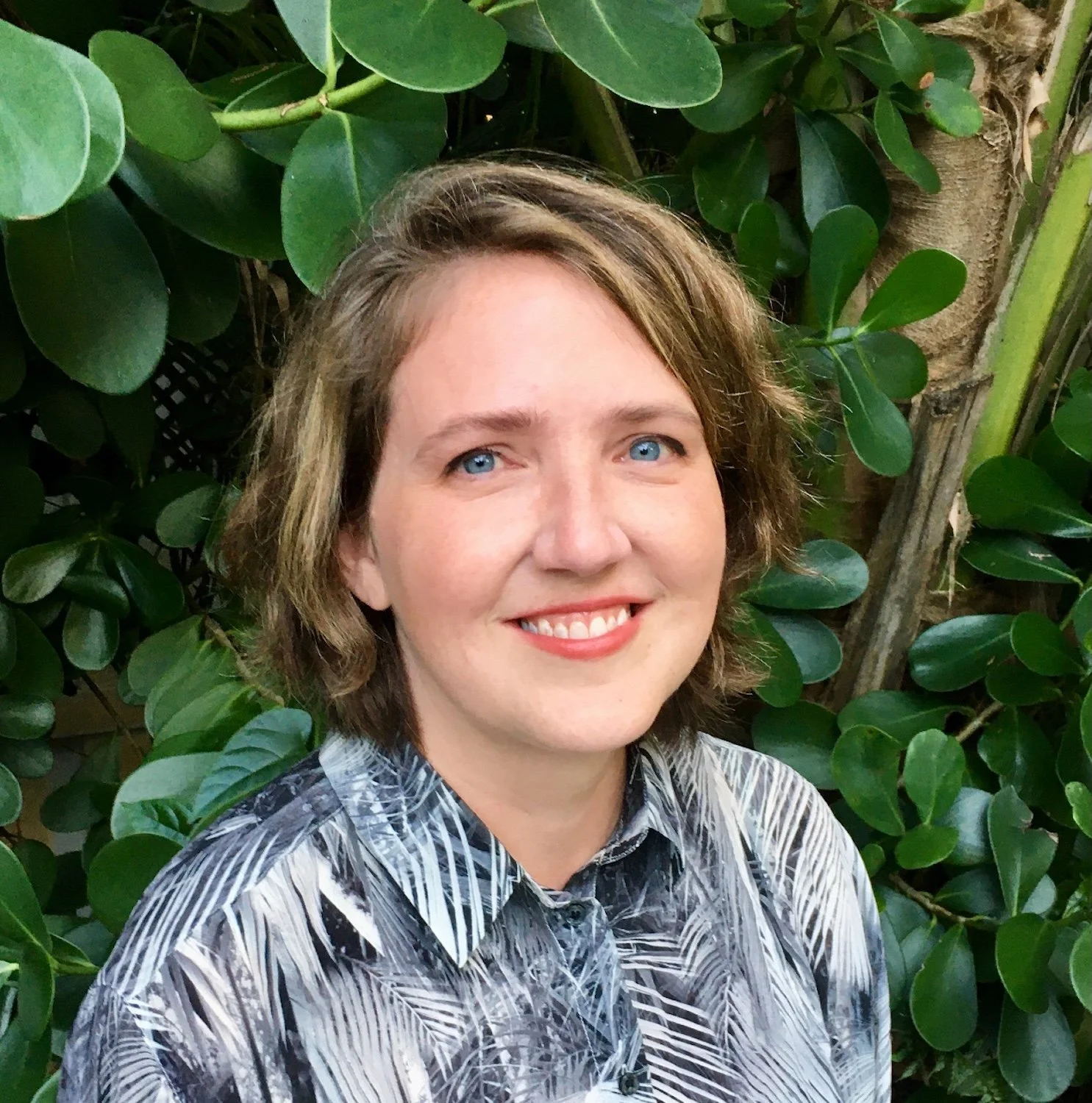
Kate McNamara and Claudia Marzollo talk to Zoë Perry about her translation from Portuguese of Juliana Leite’s Exemplary Humans, published by Two Lines Press.
During our conversation, we talk about Zoë’s unusual experience of working with the author on the translation during their Art Omi Translation Lab residency, listening to music while translating, the universal scope of the themes in Exemplary Humans, translating body-centered language and choosing the right project to work on.
Kate McNamara: We’re so excited to be able to talk with you about Exemplary Humans - both of us fell in love with this book. Thank you for translating it. In an interview published on the website Armed With A Book in July 2024, you mention that you were trying to find a home for Exemplary Humans. We’re so glad you found it in Two Lines - it’s a press that we really admire. How did you come across Exemplary Humans, and what was it that drew you to the book so much that you wanted to find a publisher for it?
Zoë Perry: Oh, yes, I love talking about this, because this is, I think, in many ways, an ideal situation. But it's less about how I came to the book, and more about how Juliana and I came together. It was around January 2019 that she contacted me. Her agent at the time had given her my email address because she was looking to get a sample translated from her first novel. Juliana and I immediately hit it off. I really liked that book a lot. And then, during the pandemic she wrote this really interesting play that was all done over Zoom, and I translated that for her. And then Humanos Exemplares came out in 2022, and I did a sample from that. But out of every author I've ever worked with, the relationship I have with her is really special. We're friends, we text, we send each other memes, and she has shown me stuff while she's still working on it. So it's just a really nice, healthy relationship, and it's unlike any other author I've worked with.
And for how this book made its way to Two Lines? I had translated a story called ‘My Good Friend’, which was then published in the Paris Review and was awarded the O. Henry Prize. When I translated that story, I first sent it to Sarah Coolidge at Two Lines and she really liked it, but after a lot of back and forth it didn't get approved by the board there. So then I sent it to the Paris Review, and they said yes. Then I saw Sarah in person maybe six months after that, and I said, Oh, remember that story that you really liked by Juliana? Well, it ended up getting published by the Paris Review. And she's like, Of course it did. And so when I had the sample from Exemplary Humans, I thought, Okay, I'm going to send it to Sarah and said, Hey, remember that story you really liked? Well, I have a novel by the same author, and it's not the same character, but it's sort of a similar universe, I would say. And that worked out perfectly. Immediately, she said that she wanted to do this book. And it was great working with them. I'm really glad that they're now distributing in the UK too.
Kate McNamara: Us too! We’re really happy about it. They’ve got some wonderful books.
Claudia Marzollo: We're so excited for everyone to read it. I actually sent a message to my mom in Italy to go find the book because it was translated into Italian, and I think she's going to love it as well. In the acknowledgements at the end of the book, you and Juliana thank the Art Omi Translation Lab, which allowed you to work on part of the translation together. How was the experience of working on this translation with Juliana?
Zoë Perry: Art Omi is the only residency that I'm aware of that lets translators and authors apply together, which is really special. We applied for it before we'd even found the publisher. I remember thinking before I went, well, this could be great, or this could be really weird; you're spending 10 days with your author. There are other translators, about five other translators and authors there, but it could be amazing, or this could just go really wrong. And also I was wondering how it might even work, practically speaking: what am I going to do? I’ll be sitting translating, and then the author's just over my shoulder? [Laughter] I don't think anyone there really worked together that closely, but it was just a really nice place. It was nice to be together in the same place. We would go on walks together, we would have coffee in the morning, we would just have organic conversations about things that happened in the book, or questions I had about it, or even just questions about what music Juliana was listening to while she was working on it, or around the process of writing it. It was just amazing. Also, it was the first time I'd met Juliana in person, because we'd only know each other over email and WhatsApp before that, so that was really nice and it was fun. I remember the first couple days we were there, we were in the kitchen and talking to some of the other authors and translators who were there who assumed we were really old friends. But we had never actually been in the same room together. So that was just really, really nice. And, I said this many times since, I couldn't imagine a better author to have done that with than Juliana.
Claudia Marzollo: That's lovely to hear. Do you think that meeting Juliana in person and spending that time in person with her changed the way that you approached the translation?
Zoë Perry: No, I wouldn't say that it changed it. It just confirmed that I was on the right track.
Claudia Marzollo: In the lovely introduction to the book, Catherine Lacey notes that the way Juliana Leite describes the background to some of the novel, Brazil’s military dictatorship from 1964 to 1985, may feel eerily current. It definitely felt very current to me, especially as while this background of state control and violence is very present, it is also very blurry non-specific, and we mainly only see it through the effects it has on the daily lives of Natalia and her loved ones. In bringing this novel to an Anglophone readership, did you have any fears or hopes about the political and/or personal resonance of the narrative and its historical setting?
Zoë Perry: It's interesting, because I feel like it's also part of literary translation history for Brazil. When I first started in literary translation, over 10 years ago, that was the time when Rio was getting the Olympics, and then there was going to be the World Cup in Brazil, and there was a lot of focus on Brazil. It felt to me that publishers felt, oh, we need to do a Brazil book but they didn't really take the time to figure out what the best Brazilian book would be. It almost felt like there was a list going around, and publishers were like, Oh, I'll take that one. And they didn't really, I think, know how to market it very well, so these books ended up being their one-and-done Brazilian book, and they didn't keep with an author. There was also a lot of expectation that those Brazilian books would have these tropes, or stereotypes about Brazil: it has to have the beach and it has to have Samba, and it has to have football. That's just a small part of what Brazil is and its history. Then recently the movie I’m Still Here came out and was up for the Oscar. It is based on a nonfiction book about the dictatorship, and I think that opened up a lot of people's eyes to the fact that Brazil had a dictatorship. I think a lot of people are aware of Argentina's dictatorship, maybe more so than Brazil's? And then there was also The Secret Agent – the Brazilian film that everyone was talking about this year – that also has the backdrop of the dictatorship. It feels like, Oh, so now we're in the dictatorship period. But I think there's a reason for that, right? Because it is relevant. And I think a lot of people are going to feel like we've been here before. I think it's definitely going to resonate with Anglophone readers, probably more than we thought, even when we first started working on the book.
Kate McNamara: Absolutely. It's wonderful how translation can do that: take a book which resonates one way at the time it is published, and then the combination of passing time and moving it across into other cultures creates new lives and new resonances for the book.
Zoë Perry: I also really like books where there might be some sort of major historical situation happening, but the narrative is really more about the daily life that happens, with that in the background. Exemplary Humans is not specifically about the dictatorship, but it's there the whole time, even when the main character — Natalia — is much older, the dictatorship is still clearly there in her mind.
Kate McNamara: Yes, I was talking to Claudia before about the slow reveals that happen in this book. How as a reader you settle inside Natalia’s mind, follow her about in her daily life, and then these little snippets of stories come out from different eras and times and memories. It is beautifully done.
When you were talking about the residency just now, you mentioned that you asked Juliana Leite what music she was listening to while writing Exemplary Humans. It has some really beautiful sections about music – there’s a section that describes how the group of loved ones would sit around singing on a Sunday afternoon ‘singing all together about those things other people before them, poets, composers, had thought and felt about life and pain’, and how these songs would allow the quiet infiltration of joy in their otherwise deeply political days filled with outrage. There’s also the section about Caetano Veloso which made me immediately want to go and listen to his music:
Sometimes, between washing the dishes and checking the level in the clay water filter, this old woman can't help but ponder over her dreams or the future. She'd rather not do that, but her head disagrees and does it anyway—that old woman's head isn't easy to live with. She wonders what will happen to the world, what fate has in store for all the living things that live on a planet floating in the galaxy and threatening to topple over. If only people knew when and which way it was going to topple, maybe they could get themselves organized in time to counterbalance or hold their breath.
The old woman feels a little stunned, a little paralyzed by these ideas, and so as not to sink too deep into herself she puts Caetano Veloso on the stereo. When she's happy she wants to listen to Caetano, and when she's feeling lost, she also wants to listen to Caetano. If the planet does indeed topple over, if everything collapses as predicted and nothing more can be done to create a new world, the old woman hopes they'll still have a big record player and Brazilian music to give humans a soundtrack, a beautiful voice on the horizon when everything’s hurtling through space.
So I wanted to ask, did you have a soundtrack whilst you were working on this book?
Zoë Perry: I do always like to ask any author what they were listening to when they wrote their book. And sometimes there are two different soundtracks. There's music that they were listening to around the time that they were writing the book, but then also the music that they listened to while they were actually physically writing it. So for Exemplary Humans, Juliana told me that she listened to a lot of MPB, which is Brazilian popular music. And so around that time, the big stars would be Gal Costa, Caetano Veloso, Gilberto Gil, Jorge Ben, Erasmo Carlos – if you've seen I’m Still Here, one of the main songs is an Erasmo Carlos song. That's what Juliana was listening to around the time of writing. During the dictatorship, record companies or musicians had to submit every song that they were doing to the government censors to be approved. So to get around that censorship, they would use homophones. There’s a really well known song by Chico Buarque and Gilberto Gil called ‘Cálice’ which, written down, is the word for ‘chalice’, but spoken it sounds exactly the same as ‘shut your mouth’ or ‘shut up, keep your mouth closed’. But no, it's pretending to be a song about a chalice! It sounds exactly the same when you're singing it. So Juliana was listening to these songs and honestly I listen to that kind of music a lot anyway, so that wasn't too difficult to track down. But then also, we had this funny discovery. Probably a lot of translators have told you that it's really difficult to listen to music with lyrics when you're translating? So I listen to a lot of Philip Glass when I'm translating, and then I discovered that Juliana also listens to Philip Glass when she's writing, and she listened to it pretty much the whole time she was writing this book. We were like, This is so weird. It has nothing to do with the content of the book, necessarily, but it's just what we were both kind of listening to while translating and writing. It was a lot of Philip Glass. I love that.
Kate McNamara: Such nice serendipity. I’d like to ask you about the process of translation. To translate a book is to become one of the closest readers of that text. You know it intimately, and spend so much time with it: drawing apart its sentences, understanding its structure, considering the nuances of specific words, even individual commas. Exemplary Humans has a very particular voice: in spite of the changes from first to third person, the work is entirely narrated through the thoughts and memories of one very old woman – Natalia – hiding away in her flat while the invisible threat lurks outside. The reader gets to spend the duration of the book inside Natalia’s head, and I found that when the book came to an end, I really missed hearing her voice. How did it feel for you to be so involved with this book, and this singular voice, whilst you were translating it?
Zoë Perry: I definitely feel like I know her very well, and I felt really close to her. I think something I thought about a lot is that I generally like what I call ‘old lady narrators’. A lot of writing I've enjoyed has had an old lady narrator. I think some of that comes from the fact that when I was growing up, my next door neighbour was my grandmother, and so I spent a lot of time with my grandmother. Juliana also, interestingly, spent a lot of time with her grandparents and a great aunt, and she's actually dedicated the book to them. So a lot of times while I was translating, I was thinking about my grandmother and how she would have said things, or what she would have thought about things. Natalia is the narrator. She is, by a long shot, the main character. You do really get to know her very well, and I do miss her. The story that I mentioned earlier – ‘My Good Friend’ – also has a narrator who is an old lady, and I had a similar feeling about that story. It was just one of my favourite voices that I've ever translated.
Claudia Marzollo: There are so many passages of the book that I kept underlining and writing down. My notes for this interview are full of beautiful quotes, but there's one part that particularly stuck with me, which is a passage that talks about language:
The daughter packed up almost everything when she moved, except the Portuguese language. She thought she wouldn’t need that language anymore once she was far away, in that foreign country, but she was wrong about that. She took her own time to discover that the world could offer up thousands of verbs and yet some things could only exist in someone’s native language; you could stray as far as you wanted, but when you struck upon one of those topics you’d soon realize that, wouldn’t you know, the only way to feel some relief was by resorting to Portuguese.
As somebody who works with languages, I wonder if you could talk to us a little about your relationship with your native tongue, and the relationship your languages have with each other. Has your work as a translator affected these relationships, or your years living in Brazil?
Zoë Perry: Yeah I thought that the way that she wrote about that was really perfect, because I definitely feel that way. Before I got into literary translation, I was more into social sciences. I did an MA in intercultural communication, and my thesis for that was actually about bilingual couples, on language use and maintenance in bilingual couples. So this is something I was already really interested in. Another layer to this is that I was born and raised in southeastern Kentucky, in Appalachia. If you've read Demon Copperhead, that’s pretty much exactly where I grew up. So there's definitely a dialect that I grew up speaking. I would speak it with my grandparents or with an older generation, but I knew from a very early age, this is not how people talk on TV, and this is not how I speak in school. You know, there's a home language, and then there is the way you speak in a professional situation, and also, where I'm from, a lot of people get told at some point in their lives, if you have a particularly thick accent, if you don't change that then you're not going to get anywhere. My dad was told that in college. I’ve spoken about this a lot with Morgan Giles, who translates from Japanese and grew up about 45 minutes from where I'm from: what is it about being from Kentucky that makes you a good translator? I think it's because we learned how to code switch from a really young age. We were aware that this is only one way of speaking, and you have got to pay attention to voice and register. You've got to. Then my mother is Canadian, and she spoke a different way from anyone else around me. And I would visit my Canadian grandmother, and she didn’t talk like the people on TV either. So I was trying to deal with all these different Englishes.
My undergraduate degree was in French and Spanish. And again, my mother is originally from Montreal, but she's from an Anglophone family, and the French in Montreal didn’t sound anything like the French I was just learning in school. All of this to say that I've always been interested in the variations of language, even within a language. Then Portuguese: I first started learning it in Portugal because I did part of my MA in Lisbon, but I moved to Brazil after that. I had a lot of Brazilian friends when I lived in Portugal, but I didn't really speak Portuguese with them. We spoke mostly English. And then when I moved to Brazil, I started speaking Portuguese more. And immediately people were like, Oh, why are you talking like that? And I realised, oh, it's because I'm saying European Portuguese things. So I had to quickly cut out that side of the language. I could keep talking about all these different elements within language!
With my own husband, who is Brazilian, when we first met, we spoke English with each other. And then this is actually pretty unusual: at one point, he spoke in Portuguese, and I spoke in English. That doesn't work well if you're in a group, obviously, so we switched to just speaking Portuguese. And then when we moved to the UK, he asked if we could switch to speaking English so that he could practice at home. And now I would say we speak a real mix. We go in and out, because there are just certain things that for some reason come out of my mouth in Portuguese, and other things, they just come out of my mouth in English. And it is nice that we're both bilingual and we can speak that way.
Kate McNamara: I wanted to jump in here – you spoke just now about the different Englishes that you have been exposed to in your life. And I was just thinking about that in terms of translation: have you had conversations with editors or conversations with yourself at the beginning of translations about what form of English to translate this book or other books into?
Zoë Perry: You would think that I would have, but no, that hasn't actually come up that much. I don't think I would ever claim to produce a perfect UK English translation. I don't think that would come out of me naturally. I've never been told, Oh, this needs to be done into UK English, or this specifically needs to be done into US English. But I do really enjoy being able to slip something in that is specifically Appalachian English, and a lot of times the editor doesn't even notice it. Actually, in Exemplary Humans, I was really happy because I slipped one in there. There’s a section where Natalia is describing her husband’s two adult nieces, and she calls one of them a ‘no count’, like a good for nothing. A “no count” is very Appalachian, so I was happy to be able to put that in. I remember asking Julia Sanches, who's a translator and a good friend of mine. I was like, I think I'm going to put no count. Do you think I can get away with that? She said to just put it in there and see what happens. And then nobody said anything!
Claudia Marzollo: That’s such a nice detail to know! Thanks for sharing that. Another thing like that I really loved about the book is that there's a lot of very body centred language in the novel, and the body seems to be for Natalia an essential instrument for understanding the world, the events of her life and her relationships, so much so that she often refers to dying as ‘disappearing’ - the end of life equals in a way the end of the body and vice versa. I’d like to ask you about the experience of translating such an embodied novel. One of my favourite quotes about translation is from Kate Briggs: “I read with my body. I read and translate with my body, and my body is not the same as yours.” Does this quote resonate with you, in relation to your translation practice in general, or to your translation of this novel in particular?
Zoë Perry: So, just about the use of the word ‘disappear’, that actually is a euphemism. It’s not super common, but a semi-common euphemism for death in Portuguese. I kept it because of the dictatorship history. I thought that was really nice, because you used the word to disappear in that context too. In the dictatorship, people were disappeared, and then ‘disappearing’ – it kind of all became the same. I liked how that worked.
I really like that quote from Kate. People sometimes talk about how every translator comes to their translation with their own personal experiences and all their baggage, but I think she is taking that a step further: it's what we've actually absorbed, and is inside our our being, how we move in the world, and how we have experienced the world physically. All this also has an effect on the translation. I think that a lot of the stuff that Juliana writes is really… I guess you could say body-centric. It's a lot about the body. The first novel of hers, it's about this woman who is a weaver, and she has this really life-changing accident where she's not able to be independent and she loses the ability to make money. So there's a lot of physicality in that book.
In terms of translating this particular book, the physicality is part of it. It is getting into the character and getting to know her so well from the inside out. And you know so much about her body because of how open she is about talking about changes in her body.
There is another thing. Part of Natalia’s narrative is her memories of having breast cancer. I met Juliana in January 2019, and I had breast cancer in 2018 so that whole year I was in active treatment. So Juliana came into my life at an interesting time, because during treatment, I had lots of times where I thought, I don't know if I'm ever going to be able to translate again. I mean, first of all, I lost a lot of work that year just because I couldn't do it. But also it just messes with your head so much that you're like, I don't know if I have the brain power to do this anymore. And so when Juliana came in, and I translated her work, it was sort of the first real project that I'd done since treatment. And it made me think Oh no, I think maybe I still can do this. A couple of years later when she wrote this book, there was the part about breast cancer, and it was on the same side that I had it. Juliana didn't know that. I'm not saying that she wrote this section about me. She didn't. But for me translating it, it was the first time I'd ever translated something about breast cancer. And I was like, Oh, this is, this feels right, I'm glad that I was given this opportunity. Because, I know how this feels.
Claudia Marzollo: Thank you for sharing that, Zoë. It makes you wonder about who is the right translator for the right book. It seems that this was very much the right book for you, and that you were the right translator for the book. Is that something that you think about: what projects to take on? Are there ‘right’ books for you? Is it just the ones that you're drawn to? Are there particular books that you search out?
Zoë Perry: I believe pretty strongly in this idea that there are books that are good for you and books that you probably shouldn't say yes to. I think this becomes a problem when certain translators say yes to a project that they probably shouldn't have, and that could be for any number of reasons. And I also see a lot of times with editors that translation can feel like an afterthought to them. Let me just go for the first name in my contact list who I've worked with before without really thinking, is this the right person for this job? And there are so many reasons why a job could or couldn't be the right one for someone. I studied in Portugal. I have Portuguese friends. I lived in Portugal. And yet I don't really feel very comfortable translating stuff by authors from Portugal. That's just not my Portuguese. And even when I'm translating stuff from Brazil, sometimes I've seen stuff from Rio that I’m not sure I’m right for because I lived in Sao Paulo the whole time. So I think it's really good if translators know their strengths and their interests. That's why a translator community is really important, because you can share that information with other people. So if a project comes and lands in my inbox and I think, Oh, this isn't right for me, but I immediately know who would do a really good job with it, then I can give their name to the editor, and hopefully they'll take my advice. I think this comes up more for people who translate from Spanish: the Spanish from Spain is so different from the Spanish from Mexico, which is so different from the Spanish from Argentina. Just because someone has done a brilliant job translating a novel from Argentina, maybe doesn't mean that you should then send them a novel from Bolivia. I do wish there was more thought about that kind of thing among editors. I think most translators are pretty aware of that. On a personal note, Peirene did a book called Body Kintsugi which I really liked. And when I read it, I was thinking, if anyone ever writes this book in Brazil, then I really hope that I can translate it, and not some random man.
Kate McNamara: Absolutely. This also makes me think about pitching, which can be a time-consuming, morale-draining and unpaid part of a translator’s career. How do you feel about pitching, and do you feel like things have changed since you began your career, in terms of how editors approach translation?
Zoë Perry: Yeah, I think things have changed. There's a lot more awareness now than 10 years ago. Definitely. It was really different. I did the BCLT Summer School in 2013 and before in 2012 there was the Granta Best Young Brazilian Novelists issue. At that point, there weren't that many people translating from Portuguese and specifically from Brazil – there was Alison Entrekin, who's amazing, and Margaret Jull Costa would occasionally do something, and Danny Hahn – but it went from there being two to three people who might do a Brazilian book, to then there being a healthy cohort of translators. So I think in that sense, there's now more to choose from. I think that it forced editors to think about who is good at translating which book, and also to ask opinions about whether or not they should do this book. It also used to be that there was this academic-translator pipeline, and I think we're moving away from that, which I think is good, because I do feel like a lot of academics are like, Oh, I don't need to get paid, or I can get paid very little. Or, this would just be a fun project I do over the summer. And there's not a lot of thinking about the career as a whole, or how it affects other people. Translators who don't come from that academic background have enacted a lot of change in that sense – we actually pay our bills with this work, so it would be good to get paid. Absolutely.
Pitching is funny. Exemplary Humans is the first book that I've ever successfully pitched. I pitch a lot, and I don't get anywhere with it. And I think a lot of translators would say the same. So it was nice that this all worked out. But I wish I knew what editors were thinking when reading samples, because sometimes I'll do a sample that's 5000 words, and then an editor is like, Great, yes, love it. And then sometimes you’ll talk to editors and they'll want to see the whole thing, which is not going to happen. With a normal length sample, which I would say is 5000 to 10,000 words, and a reader's report, I feel like you should be able to make a decision.
Even Of Cattle and Men that I translated for Charco Press, that's a book that I did a sample of. In 2013-2014, right after it came out in Brazil, I had kind of been pitching it. At some point, there was some confusion, and I thought someone else had acquired it, but then it never came out. When Charco acquired it, what I believe happened, is that they asked Danny [Hahn] to do it, and he had been leading the workshop where I workshopped my sample back in 2014 and he remembered and gave them my name. But I think translators' names get deleted off of samples or there’s confusion. That has happened to me too, that I've worked on a sample, I've done a pitch, and then somewhere in the shuffle, my name gets lost, or an editor leaves their job, and someone else inherits the project and they don't know the whole backstory, and then someone else ends up translating it.
For Exemplary Humans, I initially did a sample of a normal length, and then after a while, when it wasn’t really getting any interest, Juliana and I said, Okay, what if we do a longer sample? Juliana’s agent at the time had decided to do something unusual: to pick and choose several different sections from throughout the book for the sample, and we felt like that was making people think that the book was a lot more fragmented than it actually was. So a year or so after I did the original sample, we went back and filled in the blanks, translating everything that came in between the chosen sections, so people would have a better idea of how the book actually flows. By the end, we had a really long sample, like an unusually long sample. From the time that I started that first sample to when I started working on the book, was actually probably a couple of years. So I had a lot of time to think about the text, think about the translation; Natalia was always in my mind, and I think that was really helpful.
Claudia Marzollo: It seems like a book that might need that extra time. It's very rich writing. I think it's very indulgent in a way, the way it's written.
Zoë Perry: I think that's the perfect way to describe it.
Claudia Marzollo: That is one of the first adjectives that I wrote down when I was reading it. And I think it was right after I read the bit about Natalia eating butter at the very beginning. And I was just like, this is just so great!
Zoë Perry: I was lucky too because sometimes publishers will say they need the translation in three months, but Two Lines were very generous with time. They gave me eight months or so which was really good. You need that. I would say, you need drawer time. You need to work on it, and then you just put it away for a little bit, and you come back and it's like, oh, this was awful. What was I thinking? Or you think, Oh, this is actually really good. So I guess I'm on to something here. Let me continue. So it was nice to have that amount of time.
Claudia Marzollo: We are building an online bookshelf of books recommended by translators (perhaps one day it will become a Translator’s Library in some physical form). To do this, we always ask the same questions to the translators in our interviews. Firstly, is there a piece of writing that has guided you during your translation work, or a text or an idea that you keep returning to?
Zoë Perry: I’ve been thinking about this all weekend. I've kind of stayed away from reading much translation theory, and what I have read has always felt like it took away the magic or the joy of what I do, in the same way that studying literature can. I always loved reading so much, but academically I was always more drawn to the social sciences because I felt like doing a degree in comp lit… I felt like that drained away all of the joy that I felt from reading. Maybe I just didn't have good professors, but I feel similarly about theory. I'm just not that interested in it.
I will say This Little Art was kind of mind blowing when I read it, and had a big impact on me. And also, even though this book wasn't out when I was working on Exemplary Humans, Fair by Jen Calleja. I don't think I've ever read something about translation that I so wholly identified with. It was really an odd reading experience because it felt very soothing in a way. I know Jen, but it was like, she gets it. I know that she gets it, and in a really specific way. It was nice to see it on paper like that, and to know that other people can read about this, and it's not just going to stay in translators’ heads or in our frantic conversations over coffee. The rest of the world can hear it too.
Kate McNamara: We also love both of those books! It’s great that these translation-memoir-essays are being written and becoming known in the wider world beyond the specific circles of translation, drawing attention to the art of it. Finally, Zoë, is there a book that has been translated into English that you would recommend for people to read? And/or what is a book that has not yet been translated into English that you think should be?
Zoë Perry: For the book that hasn’t been translated but should be: I got a PEN/Heim grant in 2015 for a novel called Opisanie swiata by Veronica Stigger. When I got the PEN/Heim grant I thought, Oh, well, this is like a done deal, someone's going to pick this up immediately. And at the time, I don't know what their statistics are now, but at the time, PEN even said that around 80% of the projects that get one of these grants is eventually published. And it has been 11 years and I still haven't found a publisher for it. Hopefully I can change that now. I think maybe it just wasn't the right time back then. It’s a book with many different coloured pages and images and the most common feedback I got was that it looks expensive. It has since been published in Mexico and Argentina but they found other ways to do it. I think they've done a grayscale version of it, so it's not three different colours. The images are all public domain. There's nothing involved with rights for those. Then something else that didn't help is the original publisher ceased activities, maybe because they published expensive books to make! So pitching this book is on my list of things to do this year.
And a book that has been translated into English that I would recommend is From Another World by Evelina Santangelo, translated from the Italian by Ruth Clarke. Granta published this around the beginning of 2021 and I feel like it was a casualty of the pandemic – there were no events when it came out, and I feel like I didn't see a lot of people talking about it. It slipped through the cracks, but it's really good. It's about migration, and it's somehow both very literary and also very accessible. It's about these unaccompanied minors who have come into Europe, and then become missing, and there's this idea of ghost children. I just think it's also very timely, and I wish that it had gotten more attention when it came out. It’s worth looking for.
Kate McNamara: That's a great recommendation, thank you. We'll add it to our online shelves, and to the actual bookshelves at Tills!
Claudia Marzollo: Thank you so much, Zoë. It has been a real pleasure to talk with you about your work, and about Exemplary Humans.
