
Talking with Margaret Jull Costa
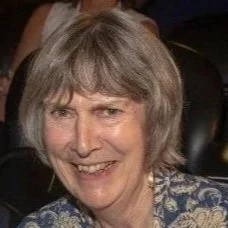
Georgia Katakou and Claudia Marzollo talk with acclaimed translator Margaret Jull Costa about her translation from Portuguese of Maria Judite de Carvalho’s And How Have You Been? published by Two Lines Press.
We discuss translating Maria Judite de Carvalho’s incredibly original voice, the almost supernatural nature of some of the stories in the collection, and the loneliness of her characters. We also talk about the relationship she has with her authors, and the changes that AI brought to the world of literary translation.
Margaret Jull Costa is the voice of a plethora of Spanish, Portuguese, and South American writers, amongst which José Saramago, Javier Marías, Fernando Pessoa, Carmen Martín Gaite and Luisa Valenzuela. She has been awarded the Oxford-Weidenfeld Prize three times.
Georgia Katakou: Thank you so much for making the time to speak with us, Margaret! Our first question is to do with your path into translation, which has been described as ‘winding’, with some of your past roles including time in academia, copyediting, bookselling… What brought you to translation in the first place, and what keeps bringing you back?
Margaret Jull Costa: It started a very long time ago when I was about 22. I left school when I was 18, and because I didn't want to go straight to university, I trained as a shorthand typist, a job that probably doesn't exist anymore. My best friend got a job on a campsite in Spain, and one summer, I went to join her there (my first ever trip abroad), and immediately wanted to learn Spanish. I went back a couple more times, having already started to teach myself Spanish, and when I was about 22, I decided that I did want to go to university – to study Spanish. So, while working as a typist in London, I studied A-level Spanish, and that gave me my first experience of translating. I remember translating an excerpt from Nada, by Carmen Laforet,into English and just loving the whole process, that close attention to language and tone of voice. It really felt like falling in love, as if this is what I was made to do. The other jobs were all necessary for me to earn a living, because it's difficult to earn a living as a translator, certainly initially. I did copy-editing, lexicography, a bit of teaching, all of which definitely fed into my work as a translator.
Claudia Marzollo: Definitely! You mentioned that it's something you fell in love doing and is that still the case? Is it still something that brings you that feeling of love and joy?
Margaret Jull Costa: Yes, fortunately! I have translated a few books I didn't like, and that was a painful experience, because you have to spend so much time with the text, and if it's a text you don't like, it's really not very pleasant. It's like being stuck with a person you dislike, but still having to be polite. [Laughter]
Claudia Marzollo: That's lovely to hear! In a 2020 interview with Veronica Esposito for World Literature Today, you mentioned that you had recently discovered Maria Judite de Carvalho, and that you were just beginning to translate her work at that point. You have now translated four of her books!
How did you discover her, and what drew you to her work? What made you decide to translate her?
Margaret Jull Costa: I had never heard of her, and then a friend mentioned the book Tanta Gente, Mariana, or So Many People, Mariana, and when I read it, I just thought, God, this is amazing!, and How has this writer not been translated before? She's such an original voice, and so unusual, it seems to me. Even in Portugal she's slightly ignored. I think she's being noticed a bit more now, after her death. She's just amazing! So I'm very grateful to that friend for introducing us. Then I translated Tanta Gente, Mariana in an anthology I did: Take Six Portuguese Women Writers. CJ Evans at Two Lines Press in San Francisco read it, loved it and asked if I would translate more of her work. I said yes, of course!
Claudia Marzollo: That's great! We're really happy that Maria Judite de Carvalho’s work is now available in English because both me and Georgia really loved reading her.
Georgia Katakou: You spoke a little already about your first interaction with Spanish, which included spending time in Spain after school and doing a Spanish A-level. Could you talk to us a little bit more about your relationship with Portuguese as a language that you translate?
Margaret Jull Costa: That came later. I eventually went to Bristol University to study Spanish. I was intending to do Spanish and Catalan, but then I got interested in Portuguese. Much later, I lived in Portugal for two years, and I do love Portuguese as a language. It's a very lovely language and completely different from Brazilian Portuguese as well. Portuguese Portuguese is utterly different. When I haven't heard Portuguese for a while, it can be quite a shock. I think how on earth do I understand that, but it comes back. People often think it's Russian.
Claudia Marzollo: Do you find that there's a difference between translating from Spanish and from Portuguese?
Margaret Jull Costa: No, I don't think so. Sometimes I forget which language I'm translating from. You’re just so into the text, aren't you?
Claudia Marzollo: Now that you’ve translated a number of Maria Judite de Carvalho’s works, what are some of the things that you have discovered about her writing that keep you going back? Has your relationship with her texts evolved over the years?
Margaret Jull Costa: With the latest volume, And How Have You Been?, I was struck by the elements of science fiction in some of the stories, which I hadn't come across before. That was quite strange and I’m not usually a fan of sci-fi. I think she does it really well, though, because it’s sci-fi with its feet in the real world. There is one story [My Father Was a Millionaire] about a woman whose body is frozen after death. When she’s brought back to life, no one wants her, no one recognises her, no one is interested. It’s chilling and terribly sad. But then most of Maria Judite’s stories are sad.
Claudia Marzollo: I think that's what Georgia and I liked about it. We like reading sad stories more than happy things!
Margaret Jull Costa: What’s wrong with us? [Laughter]
Claudia Marzollo: I think Maria Judite de Carvalho does this so well and there were stories that reminded me of other writers, but in such an original way that I'd never read before. I thought it was just wonderful!
Margaret Jull Costa: Idon't think she is like anyone else. I don't like those comparisons very much, anyway. She's just herself! She comes out of the particular period in Portugal under Salazar, which was an extremely repressive regime and very prim and proper. It was not just women it affected either. The men suffered too and she describes that very well.
Georgia Katakou: Reading these stories, I also got a sense they are all in a way conversations around power. There are a lot of children, and difficult parent-children relationships and this also seemed to me a way to discuss power within the family, and between women, men, children and the state.
Could you talk to us a little bit more about how you decided on the title story for this particular collection?
Margaret Jull Costa: CJ Evans, the publisher at Two Lines Press made that decision. When it's a collection of stories, you really often do choose one particular, catchy title and I think it's a really good one. Intriguing.
Georgia Katakou: Yes, it definitely is! So Many People, Mariana and And How Have You Been? are collections of short stories, while Empty Wardrobes and Grace Period are novellas. Was the experience different translating short stories over novels? The stories we read in And How Have You Been? all vary in length and tone. How did you approach maintaining a coherence within the collections of short stories and across Maria Judite de Carvalho’s work?
Margaret Jull Costa: It wasn’t a problem because the novellas are really long short stories, and they were originally published separately. And I do love short stories because they capture a moment in a life and she does that so well.
Claudia Marzollo: Speaking of her publishing history in Portugal, could you tell us a little more about her reception in Portuguese and why you think she has been relatively forgotten?
Margaret Jull Costa: I think it's because she's a woman, frankly. She was married to a writer, Urbano Tavares Rodrigues, and he was much more famous than her at the time, but now nobody reads him, which is a kind of revenge, I suppose. There are more women being translated now, which is good, but for a long time, there weren't that many women translated. Maria Judite de Carvalho did have a wide readership and won prizes, but she was also a very, very modest person and hated any kind of publicity. Maybe that contributed to her being less well-known too. It's hard to know, isn't it?
Claudia Marzollo: You have spoken about the fact that your relationships with your other authors are relationships of trust. Is there anything you wish you could’ve asked her about the work while you were translating it?
Margaret Jull Costa: While I was translating, there would have been things, I can't honestly remember now, but it would depend on what she was like. She also translated so I think she would have been glad to help.
I did have a wonderful relationship with the poet, Ana Luísa Amaral, but that's fairly unusual, to have that close a relationship. Ana Luísa was also a translator so that made a big difference. And she knew English very well too
Georgia Katakou: You mentioned that it is quite unusual to have a close collaborative relationship with an author that you work with. Could you speak to us a little bit more about this across your work? How do you approach your relationships with the writers that you work with and translate?
Margaret Jull Costa: I do translate a lot of dead authors, so there's not a lot of collaboration with them! I think the problem sometimes with well-known authors like Javier Marías or Bernardo Atxaga, is that they have a lot of different translators into different languages, so I don't want to bombard them with queries. Although both those have always been (or used to be in Javier’s case, alas) very helpful!
With Ana Luísa, our relationship was more of a friendship, because we worked very closely together. It was just the way she was! She had the same relationship with her French translator as well. It was a very unusual relationship, I would translate a poem and send it to her, and she'd comment on it and send it back, and then I'd work with her comments. In a way, that was the perfect relationship between translator and author. It doesn’t happen often, not in my experience anyway!
Claudia Marzollo: Do you have any relationship with your authors’ other translators in other languages, at all?
Margaret Jull Costa: In general, no. Only once, with the Dutch translator of José Saramago. We coincided at a conference about Saramago, where he was present. We were translating the same book at the same time, and that was really fun, exchanging problems and difficulties. So companionable! Because it's quite lonely in a way, translating, isn't it? You've only got yourself and the text. That's why I do a lot of co-translations now, because it's such a nice thing to share with someone else, someone who knows the book as well as I do and is equally interested and committed.
Georgia Katakou: How do you approach co-translation as a practice?
Margaret Jull Costa: My co-translators tend to be younger translators who I've mentored or whose work I know, and so I know them fairly well, and you do have to absolutely trust the other person to do the work and to do it promptly and also have the necessary skills, and not mind being edited. I don't like being edited very much! [Laughter] But it's a shared experience, a learning process for me as well. My co-translators always make really useful comments, and we all need another pair of eyes, a second reader.
Claudia Marzollo: You mentioned already that Maria Judite de Carvalho was also a translator, but she was also a painter, a caricaturist, a journalist, an editor, and translated from French into Portuguese. Are there elements of these roles that you could feel influence her writing? Did it feel different translating a translator?
Margaret Jull Costa: As a painter, yes. Have you seen her drawings? They're almost caricatures, especially of women. They are almost perfect women, aren't they? But in her stories, there are no perfect women because none of us is perfect. She had a very keen eye, and she was a very creative person. And a hard worker. And strangely elusive.
Claudia Marzollo: Her stories are very easily imaginable. I'm not normally somebody who sees things I read in my head but I could with her and I have these images quite clearly. Maybe that's something that could have come from her artistic practice?
Margaret Jull Costa: She's just a really good writer! [Laughter]
Georgia Katakou: Yes, she is! Maria Judite de Carvalho also wrote poetry, some of which you have already translated. Is there a plan to continue translating her poetry into English?
Margaret Jull Costa: I did translate a couple of her poems for a commemorative project. They were quite miserable, which is fine, but without the tang of wry humor that’s there in her stories and novellas.
Georgia Katakou: In an Asymptote interview with Julia Sanches and Megan Berkobien, you said: “I have a secret fear that perhaps all the writers I translate sound like me, but I hope that, like any good actor or musician, I can adapt to most voices, most sounds.”What are aspects of Maria Judite de Carvalho’s writing that you think are most distinctive? And how did you go about translating these into English, how did you adapt to her voice?
Margaret Jull Costa: I was thinking about this yesterday. I was on the train down to London, and there was a lady next to me reading sheet music. When you read sheet music, you're reading the notes, and you're hearing them in your head. And I thought then, that actually for me it's the same when I read. I hear the narrator’s voice in my head. And so it never feels to me that I have to find a voice or impose a voice. In a good writer, the voice is there already.
I don't know if you find that, too? People who don’t know about translation are always surprised when translations are different, because they think there must be just one possible translation. But you hear a piece of music played by different people and it’s different every time, but still Bach or Mozart or whoever! Because we're all different and we all interpret musical notes and words differently. Unless you've done translation yourself, I don't think you realize that.
But having said that, when I finish a translation, I do think that this is the translation, the only possible one!
Claudia Marzollo: I think that might be a good thing, feeling that the work is done, rather than to keep wondering if one could do this differently.
Margaret Jull Costa: There just comes a point when you think that is it. But it's interesting that if I then leave that text for a month or so before the copy-editor gets back to me, there are things that I would change, but tiny things. There comes a point when you just have to stop because it feels complete.
Claudia Marzollo: You've been a translator for over thirty years. Have you read any of the things that you've translated years later and thought about anything you would have done differently?
Margaret Jull Costa: I don't often re-read them, but I did have that experience with Fernando Pessoa and The Book of Disquiet. I first translated that in 1992 and then a more complete edition came out with New Directions. Some of the texts were the same ones I'd translated before, and others were new texts. But I didn't really change much. I didn't feel I needed to change a lot.
Having said that, I've now translated most of Pessoa’s heteronyms, and Ricardo Reis was the last one, which has just come out. There was quite a long gap between sending in the translation, which I did with Patricio Ferrari, and I did make a lot of changes when I got that back, when I reread it, and that's maybe the nature of poetry as well. Finding the perfect translation for a poem, I do find harder. Because a poem on the page seems so exposed somehow, with every word full of sound and meaning and rhythm.
Claudia Marzollo: We have spoken about this particular collection having some elements of sci-fi. In the collection’s title story And How Have You Been? a woman who has just finished recounting a traumatic experience describes her tale as a “ghost story”. A lot of the stories in this collection, despite being small windows into ordinary people’s daily lives, could be regarded as such, with the characters being haunted by their past as well as by their present, by guilt, by loneliness, by a sense of entrapment. Just like ghosts, these feelings are elusive though relentless, and difficult to describe, often because they are too scary to face directly. Yet, they come through so clearly and vividly from the pages of this collection. What was it like, to translate the ineffable and unspeakable that exist in these stories?
Margaret Jull Costa: These stories are very strange. A lot of ghostly figures appear. But while these are people often on the edge of insanity, she makes it feel quite normal, like this could happen to anyone. And I suppose it can and does. What pervades the stories is loneliness and the inability to really communicate with people. If you don't talk to enough people, you could easily slip into insanity! People are haunted by loneliness.
In the first story, a woman is trying to phone a friend because she thinks she's going to kill herself. She's deeply depressed and every friend rejects her or puts her off, and it's very painful. I don't know if that's how she felt, or if that's how a lot of people felt. Which they probably do! Loneliness is the great curse of modern society.
Georgia Katakou: The stories explore loneliness within the family, but also between romantic partners, and friends. There's this inability to communicate and one of the stories that really stuck with me was the one about the circus performer and his wife, who was so anxious about his safety and totally unable to communicate this to her husband.
I wonder also whether that also had to do with the historical context and how authoritarian regimes reap loneliness and distrust, they impose them on their citizens.
Margaret Jull Costa: That's a very sad story because she really loves her husband, but ends up killing him!
Georgia Katakou: And there's also something quite fantastical about the fact that it is set in a circus, but it also feels really normal, it could be any couple.
Margaret Jull Costa: Yes, yes! They sort of live in different worlds. I mean, he's an acrobat and trapeze artist and that's his world and she's not in that world. She can't even bear to watch him perform, which I quite understand, it would be terrifying. The way Maria Judite describes relationships is extraordinary, but, at the same time, the relationships are very ordinary. That's what's so wonderful about them.
Claudia Marzollo: There is this pervasive loneliness, but there's so many different varieties of it and it's so subtle as well. Nobody in these stories explicitly says: there's such loneliness in my life. I'm so lonely. It comes through with the unsaid as well. I just find that so incredible.
Margaret Jull Costa: There is every possible variety of loneliness, isn't there?
Claudia Marzollo: That's something that a lot of people might find comfort in reading. Not because it's sad, but because when we read of other people's loneliness, it makes us feel our specific loneliness a little bit less. I'm really excited for everyone to read these stories!
Margaret Jull Costa: They are miserable stories I suppose, but because the writing is so good and you connect with the characters, it's not miserable somehow. It's quite an odd thing! It's a bit like Pessoa in The Book of Disquiet; he's often very miserable, but the way he writes is just so wonderful, his perception of the world so clear and beautifully expressed, that you don't feel miserable at all. You feel accompanied.
When I translated The Book of Disquiet, I felt very very close to Pessoa. I felt so comfortable with that voice and that perception, especially his evocation of Lisbon, which is so beautiful.
Claudia Marzollo: In an interview with The White Review you mention that part of your translation process is ‘queries (always) to my favourite and faithful native speaker consultants’. Could you speak to us about this social, collaborative element in your translation process?
Margaret Jull Costa: All translators need a native speaker, but one who's really attuned to literature and writing, because, inevitably, you can't understand everything. There's always going to be a turn of phrase or a reference that you don't understand. I mean references are easier now we have the internet, because you can look everything up. But the way someone says something, it's subtle things like that that might escape you as a translator. That's the other thing about co-translations, you have that extra help. And it just depends on the book I'm translating, really. I did translate a book about fencing, as in dueling, and I did find someone who was an expert on fencing because I couldn't have done the translation otherwise. And in Saramago’s The Cave, where the main character is a potter, a potter friend of mine helped with all the technical stuff.
Georgia Katakou: There is so much research that goes into learning a particular vocabulary and a particular world!
Margaret Jull Costa: The co-translation I'm doing at the moment with Sophie Hughes is of a book by the Spanish novelist Enrique Vila-Matas, and his books are just full of literary references. He's obsessed with Robert Walser, the Swiss writer. He quotes from Walser all the time, so I had to read a lot of Robert Walser. Translating is really very educational. You learn so many things, it’s really a gift.
Georgia Katakou: We are moving towards the final section of our interview, which includes a few questions that we ask every translator we interview.
Have you felt like the world of translation has changed, during your career? What changes, if any, would you like to see in the publishing and translation world today?
Margaret Jull Costa: Far more books are translated now than when I first started, and there are far more translators. But there could always be more translations!
I translate from Spanish and Portuguese, which are very big languages, but there are so many smaller languages, from which nothing is translated. We're so ignorant of so many different languages and cultures. It would be lovely to have more translations and more translations from smaller languages.
And the world of translation has changed in that while there's more work, on the other hand, there's AI lurking in the background, which is very worrying. Some translators, particularly commercial translators, have already lost work, because of that. I think any really good publisher would not resort to AI. It's so sad that anyone would want a machine to do something that a human can do really well and so much better. It's so pleasurable to translate and to take that pleasure away is wretched. I don’t think AI people understand what it is to be creative. There was an article in The Guardian recently, in which one such AI expert says that while most translators could translate 3,000 words a day, a really good one could translate 8,000, as if what mattered was speed. People are not machines, we have thoughts and feelings and experiences and knowledge and sensibilities that no robot can ever have. I’m sure that AI does have many uses, particularly in medical diagnoses, but don’t let it take away our creativity, our pleasure in using our brains.
Claudia Marzollo: We've spoken to some translators who said that they've had experience of publishers reaching out to them to edit AI translations.
Margaret Jull Costa: Yes, I’ve read about that too, and how it takes just as long to edit an AI translation as it would to translate it from scratch. But why not just get the human being to do it in the first place? The machine is stuffed full of other people's words, and books, and thoughts, but cannot replicate what a human being, full of readings, thoughts, memories and associations, can achieve. Even illustrators are losing work to AI.
Claudia Marzollo: In the interview for the White Review we previously mentioned, you also said that translation theory doesn’t really have an impact on how you translate; are there any other types of texts that have been formative for you in shaping your translation practice?
Margaret Jull Costa: No. What matters is reading a lot in my languages: Spanish and Portuguese, but also in English. That’s what feeds you, feeds your own language. I don't understand translation theory, but if other people are interested that's fine, but I don't think that as a translator you need to. You have to love reading and writing.
Georgia Katakou: Is there a book that has been translated into English (from any language) that you would recommend to readers? And is there a book that hasn’t been translated and that you wish it would?
Margaret Jull Costa: One of my favourite translations is The Leopard, by Giuseppe Tomasi di Lampedusa, translated by Archibald Colquhoun. I think it's just wonderful, it feels perfect. The Leopard is one of my favourite books!
I would like to translate more of Carmen Martín Gaite. I translated two novels by her, and Helen Lane translated The Back Room. CMG wrote some wonderful short stories and I'd love to do more of those, but I have to persuade a publisher somewhere!
Georgia Katakou: Thank you so much for making the time to speak with us. Claudia and I loved And How Have You Been? and have been so excited to talk to you and also, quite honestly, a little starstruck.
Margaret Jull Costa: Thank you! It's been really lovely to meet you both.
