
Talking with Jeremy Tiang
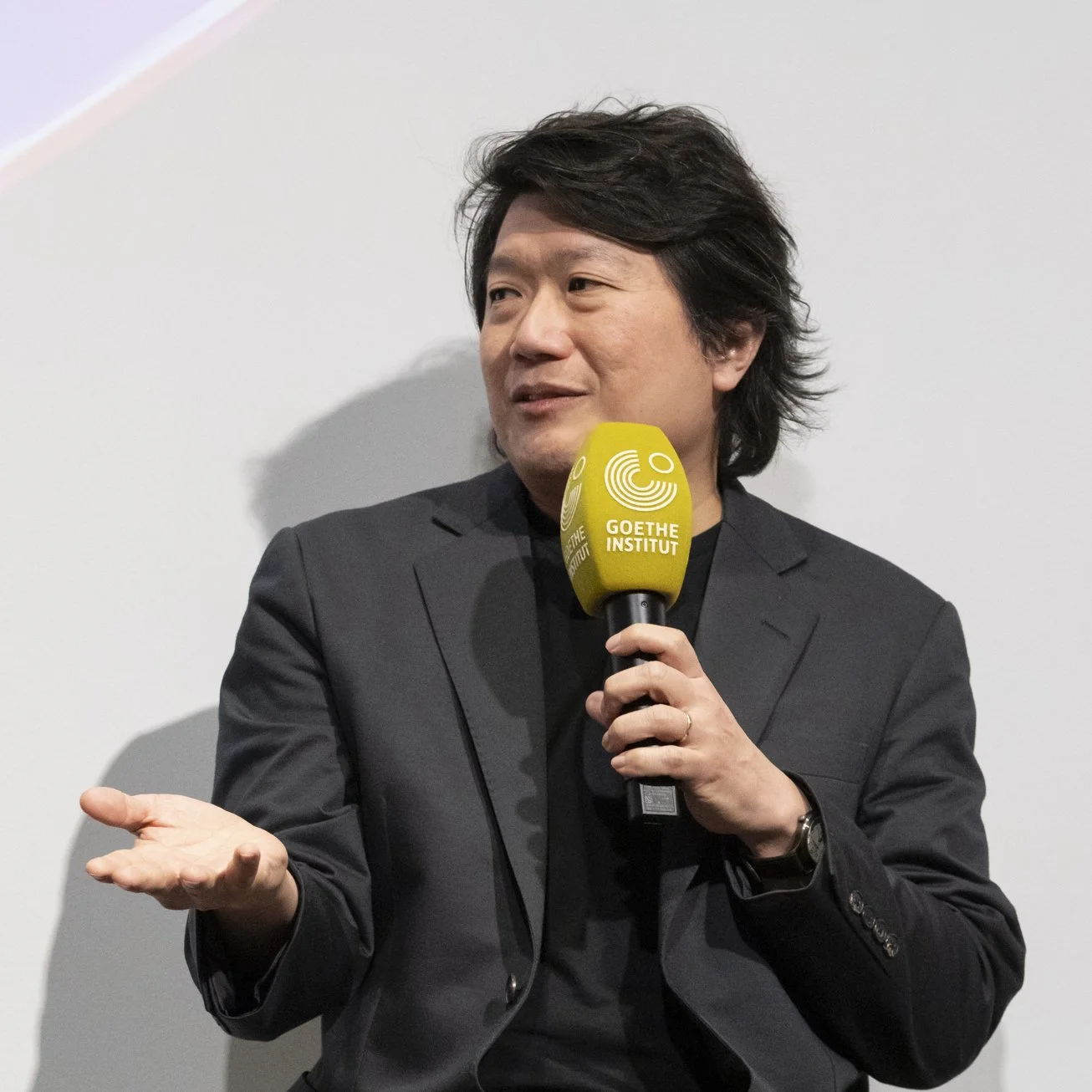
Georgia Katakou and Claudia Marzollo talk with novelist, playwright and literary translator Jeremy Tiang on their translation of Night Train
by Xu Zechen, published by Two Lines Press.
We discuss translating sound, being edited, untranslatability, the entanglement of literary translation and imperialism, collaboration as a practice in the arts, and responsibility in translation.
[Photo credit: Jasmina Tomic]
Georgia Katakou: Hello Jeremy, thank you so much for making the time to speak with us! As a first question, how did you come to translate Night Train?
Jeremy Tiang: I had done a previous book by Xu Zechen that was a co-translation with Eric Abrahamsen which happened almost by accident. Eric had translated Xu’s novel, Running Through Beijing, also for Two Lines, and had started on his short story collection, Beijing Sprawl. I happened to have done a couple of the short stories already for magazines, so when Eric was translating it, he got in touch with me and asked if he could use my translations for those stories. Because he was a bit short of time, I think, he asked me to translate a few more, and it ended up being 50/50. So when Two Lines came to me and asked if I could do the next Xu Zechen book, it was in a way a nice passing of the baton: Eric did one book, we did one book together and then I took on this latest one.
Claudia Marzollo: It sounds very organic! How was your relationship with Xu Zechen while working on this translation? And also, since you had already translated a collection of short stories with another translator, do you feel that it influenced the way you translated the work in any way?
Jeremy Tiang: With Beijing Sprawl, because Eric had already done Running Through Beijing, I found that I was very much trying to match his style. With a short story collection you want it to feel coherent, so we passed drafts back and forth and made sure it felt unified. And I do find myself holding on to some elements of that. Even though this book is unrelated, I do feel like Xu Zechen’s voice in Chinese is quite consistent. So definitely, both consciously and I'm sure unconsciously, there’s a kind of continuity with what had been done before, that maybe wouldn’t have been there if I hadn’t translated parts of Beijing Sprawl. My relationship with Xu Zechen was friendly, but I didn’t have that much contact with him. He sent me the book and asked if I could pass it to Two Lines, and then Two Lines asked me to translate it. Since then, we've been messaging a little bit. I have wildly different levels of engagement with the writers I work with. With some of them, we've been working together for 10 years or more now, and we've become besties. When I'm in Beijing, I stay in the flat of an author I translate. With others, like Xu Zechen, the relationship is very professional. If I have a question, I will ask him. However, in this case I barely needed to ask him anything because everything I needed was there, on the page. I found that I got the story right away, it was very legible to me. There was nothing that I was unsure about, he just writes in a very clear way. It's also just so visceral that I thought, I know exactly what this is. I was right in it. So I was able to translate it without checking in with him too much, but I knew that he was there, so that if I did have a question, I could ask him
Georgia Katakou: As a reader too, the clarity of his writing is one of the things that really stood out to me. Something else that struck me is the auditory experience of reading the novel. One of the scenes that I really enjoyed was Munian describing the sound of Mr. Jin’s slippers which ‘shuffled and flapped over his head many nights, bak pak bak pak’. [p. 5] We're really curious to hear, how do you go about translating sound when it's such a core element of the novel?
Jeremy Tiang: Something that I'm really into is importing Chinese onomatopoeia, which I think reflects how things stereotypically sound in the culture. So the question is, can I bring that across? I also slapped my own slippers on the floor to see what sound that made. With sound, I think it’s partly real world, and I'm always going on YouTube searching things like, what sound do llamas make? After listening to that, I can see if that is something I want to bring into the translation. I also consider how it’s captured in the original, if it’s an onomatopoeia in the original, do I want to try to bring that into English?
A couple of years ago, I translated Liu Liangcheng’s Bearing Word, which had a talking donkey in it, though to humans the donkey just made donkey noises, which in this case were ahnng-jee, and I was determined to not change that into hee-haw. So could I make ahnng-jee work? How would you even spell that in English? (It would be ‘angji’ by the rules of pinyin phoneticisation, but I like playing fast and loose.) And I think it was more interesting than if I'd just gone hee-haw, because that's the expected sound. Whereas by bringing in the Chinese way of transcribing donkey noises, I hope to make people think about what donkeys actually sound like because they don't actually go hee-haw. I found some donkeys on YouTube and they do actually say something that sounds like ahnng-jee. So I thought, I'm going to make slippers go bak bak bak because that sounds to me like slippers. Whenever I can, I try to keep the Chinese sounds.
Claudia Marzollo: That's lovely. Do you find that there’s some resistance to that at the editing stage?
Jeremy Tiang: Yes. I try to take into account that most of the time I'm working with editors who don't speak Chinese. And that's useful input to me, because a certain phrasing might make sense to me because I know the Chinese original, but it might not make sense in English. So it's usually a bit of back and forth. If they're saying, this is weird, I'm not sure, it might confuse readers, then I say, did you know what I meant even if it was unusual or did you have no idea what I meant? And if it's the second one, then okay, yes, maybe we need to adjust it. But if it's the first one, then I feel like we can just trust the reader to go along with it as long as it's legible.
Claudia Marzollo: Definitely. That's really interesting! One of the things that I really loved about Night Train is that I haven't had such visceral reactions to characters’ actions and choices in a long time. The novel deals with how the choices of a single person affect a lot of the other people around them, and there's this ripple effect, and sometimes the results are pretty tragic. So I was wondering if, while reading or translating this book, you also had reactions to any of the characters’ actions and choices. And if so, do you feel like these could have influenced your translation in some way?
Jeremy Tiang: I always try to channel the author and I felt like he wasn't judging these people even though they're objectively making very unwise choices and doing a lot of pretty horrible things. On my first read through I definitely had quite a visceral response to what was happening, I wanted to shake them, or stop them or something. But I had to get to a point where I also wasn't judging them, because I don't think Xu Zechen is in any way approving of their actions or condoning them. I had that urge to signal that I did not approve, but I didn’t want to do that. I didn’t want to judge them, I wanted to trust that the reader would understand what this book is doing, and that we're not approving of these actions, and I'm not going to get cancelled for this. But there is that bit of yourself where you know none of this is okay, and you just have to get to a point where you’re saying yes but people do behave like this. The book is recording especially the way many young men think about and behave towards women, and the book doesn't condone it. But it is quite difficult to read at times, because I think we have maybe pulled away from describing some of these things because we don't approve of them. I think that is a big part of the reason why we translate, though. I don't know if someone would write this book in English, but it did quite well in China. So, it's good to know that the way these things are presented and the things that people are talking about are maybe a bit different. And I think we also need to translate and read without judgment.
Georgia Katakou: Absolutely! I was talking to Claudia about this when we were reading the book and discussing it. I thought it was such an excellent reflection on masculinity in a way that I definitely have not read before. I was initially repelled, but the matter-of-factness of the narration really left a lot of space for the reader to reflect on what are we reading. I loved hearing you talk about how you translate and read without judgment!
Moving a little bit away from Night Train for now, one of the things that Claudia and I did to prepare for this interview is listen to some of the conversations you've had with other translators and writers, and we both really enjoyed listening to an episode of Novel Dialogue you did with Yan Ge and Emily Hyde. In that conversation, you describe how all words are untranslatable. We're wondering if you could speak to us more about how you understand the untranslatable in your practice in general, as well as some things that you feel were untranslatable in Night Train.
Jeremy Tiang: At a very literal level, words are untranslatable because we use them to mean such different things. There is a Chinese word for supermarket, and I translate it as supermarket, but I know that some readers will envision something like a Tesco, which is very different to a Chinese supermarket. So then you try to find some descriptors that help pull more in that direction. Another example is trains: trains in the UK today are very different to trains in China, and trains in China today are very different to trains in the '90s. So, how do you convey all of that? I know that the pictures that people have in their minds, even just of these basic factual things, are not going to be quite what the author intended. But there's also the more abstract concepts that are untranslatable. I had a bit of back and forth with a British editor once because I translated a story where some parents were saying disapprovingly, my son, he's so playful, and she circled that and went, isn't it good when children are playful?. I grew up in Singapore, where children are not meant to be playful, they're meant to behave, they have to work hard. So to me that was such a shock, because it wasn't that the word playful was wrong, it was that it has such different associations. So I think I did have to add she said disapprovingly just to be clear that playful in this context is not a good thing. It's not so much that the meanings of any of these words were in doubt, it's that the associations that the reader will bring in different cultures are just going to be very different, so it’s a matter of trying to anticipate that, and mitigate it where possible, or to give additional scaffolding or context where needed. It's just little things, like in English we say I'm so excited to work with you, but if you say that in Chinese you sound kind of deranged and have to tone it down to I am glad to be working with you. But likewise if you say that in English, it sounds flat, so if I’m translating the other way I need to amp it up to I'm so thrilled to be working with you. That's what I mean when I say things are untranslatable. You can convey the actual meaning, that’s not hard. The hard bit is everything around it.
Claudia Marzollo: Is there anything that comes to mind that you felt that you struggled to find a way to convey in English while translating Night Train?
Jeremy Tiang: There were a lot of small challenges. There's a bit where one character is asking about whether her love rival is pretty, and in Chinese the answer is just “She's from Suzhou, what do you think?” and I thought, okay that needs context. So I went with something like “She's from Suzhou. Have you ever seen an ugly woman from Suzhou?” Which is less elegant, but the Chinese reader would know the stereotype of Suzhou being the land of beautiful women, and I needed to get that across in the least obtrusive way. Sometimes it can feel like you’re overexplaining. You want to do the least amount of explaining you can, while still making the text legible.Likewise, Chinese universities can be much more hierarchical and authority-driven; the way Munian talks to his superiors doesn't come across as quite so transgressive in a non-Chinese setting, but in China the fact that he's talking directly back to his professors is actually quite shocking. So I tried to filter that in people's reactions, or to make it clear that a certain level of deference is expected, and he's not providing that.
Claudia Marzollo: Remaining on topic of untranslatability, and of nuances that the anglophone reader might miss, there seems to be a lot of intertextuality throughout Night Train: Munian is a student of Chinese literature who reads a lot, and there are a lot of quotes in the text. We were wondering how you approach reading around the work that you’re translating? Is there anything that you think people who are not familiar with Chinese literature could have missed in terms of references?
Jeremy Tiang: I think in this case it was more a question of gesturing towards the academic environment. I didn't feel I needed to read these books, because a lot of Chinese readers would be aware of them but not necessarily have read them, the same way a British novel might refer to The Faerie Queene,and a reader knows what that is even though they probably haven’t read it unless they did an English degree. So as long as I conveyed that these were classical texts, that was sufficient. I made sure to use the standard title of each text, so people could go look it up and find an English translation. Night Train is quite unusual in that it's a campus novel where you are almost never in the classroom or the lecture hall, you're everywhere else. If Munian spent a lot of time in a more traditional university setting, having deep conversations with his professors about literature, then I probably would have done more reading around. But in this novel, it felt like that wasn't what I was being called to do.
Georgia Katakou: I didn't think about this before now, but when I think about Night Train, I think about the garden! Or Munian’s flat, but not really a campus or a classroom. We would love to talk to you about your wider translation experience too. One of the texts that In Other Words has been reading and suggesting to people for a long time is Violent Phenomena: 21 Essays on Translation, a collection which you co-edited with Kavita Bhanot. It’s a text that has been really influential on our work. You brought together 21 translators and writers to address a variety of topics, including the entanglement of literary translation and imperial violence. Almost four years on since its publication, do you see translators, readers and publishers engaging more with the colonial legacies of literary translation?
Jeremy Tiang: I think the book sparked a certain amount of conversation. I actually revisited it recently, because the US edition is coming out and they asked me to record the audio book. So last month I went to a studio in Manhattan every day for a week and read the entire book out loud. I was quite relieved to find that it did still hold up, that it hadn't gone out of date in the last four years, which had been my fear. After reading every word of it, I can say I still stand behind it. And I'm hoping that it being available in the US will touch off another round of conversation.I think there definitely is more of an awareness that, when you're bringing a text into English, you're not just engaging with a single text. You're engaging with an entire culture and you have to do this mindfully. You shouldn't just bring it over without regard to how it's received in the original culture. You have to do this with sensitivity. You have to assume that people in the source culture can read English and will be aware of how they're being presented, and might have opinions about it. The person doing the translation can be important, the translator isn't just a neutral figure. The way the text is presented in the English-speaking world is important. I started translating about 15 years ago and when I was starting out, I had to say to many publishers, please don't do a red cover. Please don't put a lantern on the cover. Don't put a fan on it. These are things that if I hadn't said it, they might have done. Now I don't have to say it anymore. Translation publishers got the memo that you shouldn't do an orientalist cover, and that a book doesn't represent China or Taiwan. It represents itself. It's a story in its own right to be taken on its own terms. And I think that has filtered through the ecosystem; books are reviewed on their own terms, and Chinese books don't get compared to each other even when they have nothing in common.So yes, I think there has been a greater sympathy towards what translation entails and how to do it with sensitivity and not in an imperialist way. I think Violent Phenomena crystallized a lot of debates that were happening at the time, and there’s something about having all of these arguments in one place and in conversation with each other that made these essays more powerful than if they were just encountered on their own. I do think there is something about the anthology that gives it a certain force. I hope that these conversations will continue, and also that the day will come when Violent Phenomena is irrelevant because we've moved so far past all of these concerns.
Claudia Marzollo: I also really love that there's recommended reading at the end. I love these kind of things in general, but I think that's such a good addition to the collection because it signals that these essays did not come from nowhere, but there's a context, there are other conversations happening.
Georgia Katakou: You mentioned that you just did the recording for the audio book of Violent Phenomena and I was wondering if you could speak to us a little bit about the details of it coming out?
Jeremy Tiang: Sure! The US edition is out with Harper Via, which is the Harper Collins translation imprint. [it’ll be already out when we run this interview upon the publication of Night Train] Because Tilted Axis doesn't do audio books, this will be the first version and they gave me the option of recording it myself, or getting somebody else in. I've never done an audio book before but I have done some recorded work. I went to drama school, and I got into translation via being a less successful actor [laughter], but that did give me the training to do this. It was a really good experience! With some of the audio books that have been done of my translations, the reader clearly didn't speak Chinese and had not tried to get the pronunciation of the names right. There are so many languages in Violent Phenomena and I knew I was not going to get all of them right, but I knew I was going to try harder than maybe someone who does this for a living would. So I contacted all the contributors to ask them to send me a voice note with all of the words that weren't in English from their essays. Then, before recording each essay, I just frantically listened to the voice note as many times as I could and just tried to get it at least close. I mean, there were varying levels of difficulty: the Welsh almost broke me. Just trying to say all of these words was one of the hardest things I've ever done. But the effort of listening hard and trying to replicate these sounds was meaningful, and thinking about what they meant for the essay, and what it means that legibility is so difficult. Like even getting everyone's name right, especially as many of our contributors probably hear their names said wrongly on a daily basis. So it was really, really difficult, but I'm glad I did it, and I hope it's not too painful for the contributors to listen to because I'm sure I didn't get everything right, but I tried really hard.
Georgia Katakou: I think there's something really beautiful about the effort of carefully listening. I'm excited to listen to the audio book, it's so exciting that it's coming out in that form!
Claudia Marzollo: Through our interviews we have often thought about co-translation and translators working together. You've talked about Violent Phenomena as an example of collaborative work. Do you consider translation to be a collaboration in itself?
Jeremy Tiang: You're always collaborating in some way. I also do my own writing, and it feels very different to be sitting faced with the blank page, whereas with translation someone has already created a piece of art that you're now engaging with. So translation is inherently collaborative, and in some cases I'm working very closely with the author: we're in daily communication or if we're able to be in the same place, we're hanging out all the time and talking through every single choice. But even if the author is not available, I'm still engaging with what they have put on the page and that's already collaborative. There's a further collaboration with the editor, who I think is a vital part, an additional set of eyes. There's a lot of back and forth there about things I might have missed, things I might not have realized. Sometimes they see connections that I don’t because I’m too close to it. Maybe I'm obsessing about every sentence but then they say, isn't this bit meant to be an echo of that? and I realise they are right.
My background is in theatre, and all theatre is collaborative. You're in a space making something together. Theatre translation is especially collaborative, so my best experiences have been when I've been in a rehearsal room and the playwright is there, and the director is there, the actors are there, and the designers are there, and we’re all working together on making this piece and bringing it to life. So my translation of the script, my final draft, is their first draft to make something on top of. And then I really see how this whole process is collaborative and I'm just one step in it; and it goes back and forth, it's not like I present something that remains unchanged. An actor says a line a certain way and that makes me think, okay, I see how I need to change this to make it really sing, or the audience consistently doesn't laugh at something that they should be laughing at, and we need to make it as funny as it was when I first encountered it in Chinese. I think all art making is collaborative in some way, but because translation is an interpretive rather than generative art, you're always going to be involved with at least one other artist. So it can't not be collaborative.
Georgia Katakou: I love that! And I also loved hearing more about your background in theatrical translation. It sounds like a wonderful experience to be in the room with so many different artists and to be working together on a piece.
You have worked as a translator across genres, are a writer and an editor. Across your different roles and your different positions in the industry, what political responsibilities would you say that translators and writers carry today? And what are some things in your practice that you feel like are the most political?
Jeremy Tiang: I should say that I'm answering for myself here, because I think that's something that every artist needs to decide for themselves and I'm not trying to be prescriptive in any way. I think that because I translate from a heritage language, and because I grew up speaking Chinese, there is a certain access that comes to me easily, but also a certain responsibility to represent things as they should be represented; there’s a responsibility to not think that I know everything just because I come from that culture, and to make sure that I do my homework, and consult, and learn when that is necessary, but also to step in when intervention is needed. If I think an editor is taking away cultural specificity, I can step in and say, no, I'm sorry. I grew up with this and I would like to see it presented in a certain way. Which is double-edged, because I know that me being ethnically Chinese and having grown up in Asia can make it hard to push back against and I don't want to use that authority to defend something when actually I should take a step back and listen. So there's a bit of give and take here.
I do think that I have a connection to the source material that not all translators from Chinese do, and I feel that gives me a responsibility to take extra care and to really make use of this platform that I've been given, and make sure that the work is treated with the respect that it deserves, whilst also not foregrounding myself too much and listening to the voices on either side of me.
Claudia Marzollo: That's a great answer, thank you for that.One question that we ask all translators is whether they listen to music while they translate, and if they have a soundtrack that is connected to the book that they've translated. Are there any sounds or music that you have connected to your translation of Night Train?
Jeremy Tiang: This wasn't really a soundtrack, but I found a lot of train videos on YouTube that came with train sounds. I feel like Munian is thinking about trains all the time, so having that on was helpful. Every time I looked up from my laptop, a train would be going past some gorgeous mountain scenery, and that was just what I needed. I did also have '90s Chinese music on at some points, which was basically what I was listening to growing up in Singapore in the '9os.
That was my soundtrack for this particular book, but there are also times when I just need something neutral. Especially if I'm editing or doing a reread of the text and trying to quieten the voices in my head, I listen to a Brian Eno album called ‘Music for Airports’, which is really soothing. Other times I put on Japanese ambient music, that’s a stabilizing force that helps me to concentrate.
Georgia Katakou: I also listen to ‘Music for Airports’ while doing some writing, it's great to have on!
One of the things that we do through these interviews is gathering recommendations by translators and collecting them into an online bookshelf of recommended texts. So we’d like to ask you, is there a piece of writing that has guided you during your translation work or a text or an idea that you keep returning to?
Jeremy Tiang: There’s an essay in Catapult Magazine called The Case Against Italicizing “Foreign” Words,by Khairani Barokka. Editors are always italicizing the foreign words to my texts, and I used to fight with them, but now I simply send them this essay because she makes such a strong case. It's also an essay that I go back to all the time because it basically says that just because something is a convention it doesn't mean you have to follow it: let's think through the implications, let's think through why it's being done, and let's think about why that's different. That applies to so many things. There are all these things that I do while translating that I have to stop and ask myself am I doing this because that's right for the translation or that's just what the convention is in English/in the translation world? Is there a way to do this differently? Italicizing the non-English words seems obvious to many people before they encounter this idea. That's just what you do. But when you stop and interrogate it, you see how it's connected to these bigger ideas of imperialism and who gets to speak. I keep going back to this essay and I feel like I learn something new each time.
Claudia Marzollo: I love that essay. Is there a book that has been translated into English that you would recommend for people to read? And is there a book that hasn't been translated into English that could be from any language at all that you think should be?
Jeremy Tiang: I'm not sure if this book needs a boost because it's currently on the International Booker shortlist, but Taiwan Travelogue by Yang Shuāng-zǐ, translated by Lin King, is an amazing text that I've read in both Chinese and English, and I love the layers of it. Lin King is the perfect translator for this because she speaks Japanese and Taiwanese as well as Mandarin. so she fully gets the cultural context of the book. Taiwan Travelogue is set during the first half of the 20th century when Taiwan was still under Japanese control. It follows a Japanese woman and a Taiwanese woman as they go around Taiwan on a food eating tour, and the descriptions of food are next level. There also may or may not be feelings between them, but the question is: can a colonizer and a colonized subject have any kind of relationship on an equal footing? And of course, they're translating back and forth the whole time between Japanese and Mandarin and Taiwanese, and each language has a different valence. It's such a delicate balance, written with a real lightness of touch. It brings in these heavy issues, but it never feels heavy, you're on this joyous journey that celebrates Taiwan and Taiwanese food in that moment in history. And the translation is similarly light-footed and celebratory, but you come out of it feeling that you've had such a profound experience.
There are Chinese books that I wish were translated, but I'm constantly pressing them on publishers, so I hope they will be at some point. And there are definitely books in other languages that haven’t been translated yet that I would love. I recently saw that some of Jeyamohan’s novels are being translated from Tamil into English for the first time, and I'm really excited to get my hands on those from everything I've heard. But what other authors are out there with the perfect book that I've been searching for, that I won't know about until they are brought into English? Maybe that's an unsatisfactory answer, but as a translator, that's the best answer I can give.
Claudia Marzollo: That's a really great answer, and it's a call to do more translations too! I have one last question, to bring the interview to a close: if you could describe Night Train shortly, in a couple of words, how would you describe it?
Jeremy Tiang: It’s basically a book about what happens if the regular service of your life is disrupted and you find yourself on the rail replacement bus.
Georgia Katakou: I love that, such a great description. And thank you so much for talking to us today, it’s been a pleasure.
