
Talking with Jen Calleja
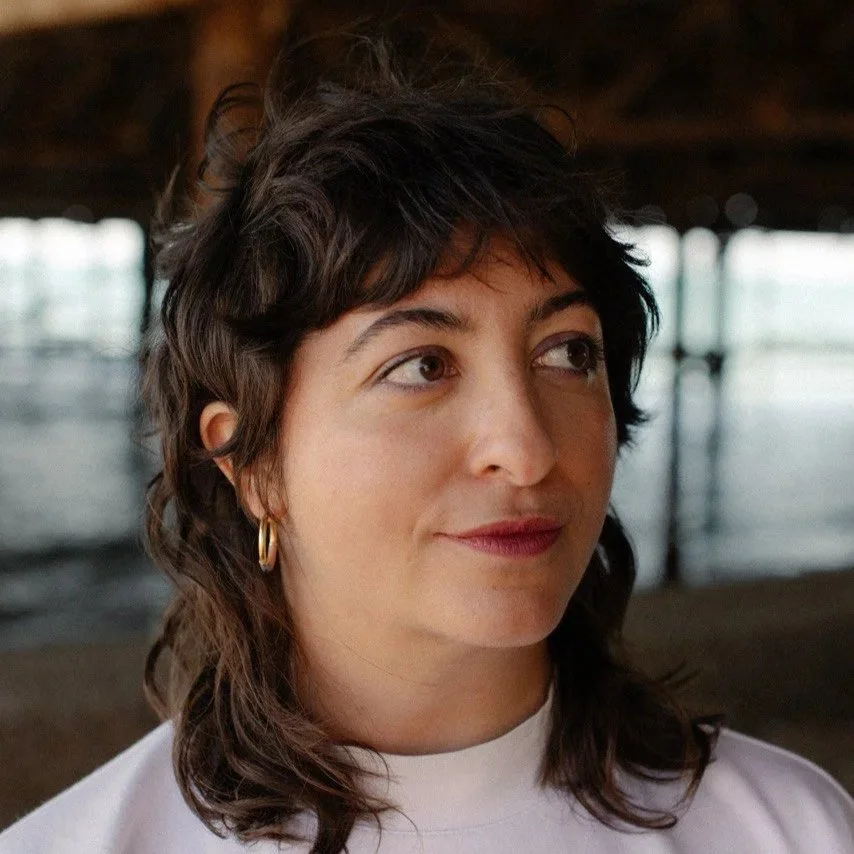
Georgia Katakou and Claudia Marzollo talk to writer and translator Jen Calleja about her translation memoir Fair: The Life-Art of Translation.
They discuss experimenting with form, the political aspects of translation as well as the importance of recognising and naming people and texts who helped her become the translator and writer she is today.
[Photo Credit: Jorge Antony Stride]
Claudia Marzollo: Thank you so much for meeting with us today! Our first question is quite general. We normally ask translators how they came to translate a certain book, but this is a translation memoir, so we wanted first of all to ask you if you could tell us a little bit about how you came to write ‘Fair’? You also talked about the title of your novel ‘Vehicle’ in an interview for La Piccioletta Barca, and how layered the meanings of the title are, and it feels that way for ‘Fair’ and its subtitle ‘The Life-Art of Translation’ as well. Would you be happy to tell us a little bit about that?
Jen Calleja: So, for quite a few years, I've been writing smaller pieces about translation. I had a column in The Quietus for a few years, which was a column that I pitched I think, around 2014 or 2015, because I felt like it was time to talk about translation and I just didn't really see many people talking about translation in the general literary scene. Obviously there was a lot of writing happening in places like Asymptote and Words Without Borders, which are dedicated places for translations and writings about translation, but it felt like no one was really talking about it, from a U.K. perspective at least, in the general literary scene. So, I spent quite a few years writing small essays and diaristic pieces, but then realized that these were all probably going to vanish or they weren't easy for people to find. So, I thought it was time to probably try and write a book where a lot of my thinking could be collected. I felt like there was so much that I wanted to say that it would take many years to work on it and it ended up taking about five years. I worked on ‘Fair’ as part of a funded PhD at University of East Anglia, which confused a lot of people because the PhD is in creative and critical writing, but the book is obviously about translation, so I was kind of straddling the translation department and the English department. I think that gave me the opportunity to write it and without that funded opportunity to immerse myself in reading other people's translation memoirs, in reading all the kinds of writing about translation that I really loved which was hybrid, trying out fictional and experimental forms, I wouldn't have been able to write it. Basically it was the biggest book advance I ever received and will ever receive in my life.
The title, as you say, I think it was partly inspired by ‘Vehicle’ for that ease of having a word that speaks to many different layers and aspects of what the book is doing. And at the end of the book is a kind of summary/manifesto where I draw on a lot of the meanings of the word fair. But it also talks to the structure of the book. And then “The Life-Art”, which came quite late, again is trying to describe what the book is, and the main push for the book is this idea of bringing the translator back into translation: you can't have translation without the translator. And yet, more and more, the translator is being viewed as an annoying human aspect to the labor of translation. So I was wanting to really signal that you can't have the art of translation without the life that is behind it. And I think it is also speaking to the craft of memoir, because obviously this isn't my life, I don't live in a giant constructed fair. It's very artificial and it is also wanting to make extremely clear how artificial memoir is, in a very heightened form.
Georgia Katakou: This is so interesting, and it really ties into the second question we wanted to ask you about form, particularly in what you were saying about artifice, and how artificial a memoir can be. In “Welcome - Glossary of Terms / Terms and Conditions” at the very beginning of “Fair” you described fairs as one big performance. We were wondering if you could speak to us about this form that you chose for your translation memoir. I really enjoyed seeing the translation game on a retro arcade console, the laser quest, the choose your own exit toward the conclusion. The playfulness of the form felt very liberating and a real joy to read. So, we're really curious to hear more about how you thought about the form and brought it together.
Jen Calleja: Yeah… Originally I was envisaging a tower structure that would be going up and down but starting in the base in a kind of the bottom layer and then reaching the top, so quite a success story trajectory. But the more in depth I got into exploring what it's been like being a literary translator, the more I realized I felt quite a profound sense of sadness, because I didn't really feel very successful, because I was still not really being able to make a living out of translation, working sometimes seven days a week. Taking on board that sense of having not worked hard enough, or not doing it properly, often the answer can be structural. So, both in the sense of the structural issues with the publishing industry, but also realizing the structure of ‘Fair’ was wrong and was putting across quite a dangerous message and was falling into the trap of a traditional rags to riches memoir.
It was actually my partner who pointed out, Aren't you always going to these massive fairs? There's the London Book Fair, and the Frankfurt Book Fair, there's art fairs. And then what was also very present was Hastings: I moved to Hastings about four years ago, and Hastings is a British seaside town filled with arcades and a roller coaster, and Zoltar, the animatronic fortune teller. So, my partner unlocked this thing that had been very present and was the perfect memory palace. I also wanted to create a parallel where we can see these places, art fairs and book fairs, which are meant to be quite serious, as being akin to fun fairs because of how illusionary they are as spaces. So that's where the form came from. And then, I've really embraced being a humorous writer. When I started writing, I think when my short story collection came out, or even when my poetry collection came out about 10 years ago, I was really shocked that people found me funny and that I was funny writing something that was also very serious or talking about quite serious things. I think this has just become my thing now, which I think is just very much linked to my personality. And what's more fun as a challenge, than to ask yourself How can I talk about what it's like to translate German literature in a hall of mirrors? These are the things that kind of keep me going, this funny smashing together of really different things and then seeing what can come out of it.
Claudia Marzollo: I love that. Going through the book felt like a really fun experience. One of my favorite aspects of ‘Fair’ is the involvement that there is as a reader. You really feel like you're going through this fun fair, and you feel very welcome, you feel guided through the book. And there are also moments when you can make your own choices, for example at the end when you give the reader a choice of where your exit will be. I also really loved what you write towards the end: “I've enjoyed being your guide, taking you around the book/fair. It's what I do every day, really, guiding people around a book they can't yet fathom, step by step”, which speaks to the role of the translator as a guide for readers through books they would not be able to read otherwise. So I was wondering, as a translator and more specifically as a translator of German literature, what is your relationship with the readers of your translations? And as a reader/translator, what is your own relationship with the text, knowing that you will deconstruct that text and put it back together?
Jen Calleja: A big aspect of experimental writing is presupposing that your reader is up for a challenge, or up for playing along, and that they're even possibly up for being super involved in the creation of what it is that you're writing. When I'm teaching experimental fiction, I always say, Don't imagine your reader is the person that's going to get annoyed in the second sentence when they realize what's happening, but aim for the reader that is going to love this. And that's really the advice I give myself. So, don't worry if what you're doing seems quite weird or something that other people don't do, because there is going to be a reader who will really enjoy it. And I think that confidence came from my earlier books, and meeting people that were so shockingly enthusiastic about them. So I'll always aim for that reader that will love it, because if I love it, I want us to be on the same level. In terms of how that maybe is related to who I imagine is going to be reading my translations, I definitely come from my own perspective and my own knowledge, which doesn't necessarily mean that if there's something I haven't understood and I've had to research in a translation, that I then say to the reader, I'm going to explain this to you. I have to be where the author is in their knowledge, so I have to learn a lot of stuff to become them and to get to their level, but at the same time, I picture a reader who, even if they're going to be intimidated by what they find, they’re still going to be able to enjoy things on a language level. It's really hard to explain, because I don't imagine a specific person. Although I think sometimes when I am translating, I picture a friend, or I picture someone who's a real person to try and imagine I'm telling them the story and how I would tell it to them.
I think it also depends on the book, and on how much I feel like I have to get involved in its crafting for the new audience.
Going back to your final bit of the question about reading a book and then about imagining rewriting it, it is really like building a set from scratch. I am reading the book, and at the same time I'm getting all the nails together and choosing the paper and materials, as I'm reading. It's like making a plan for building a very physical structure. And again, I'm a very visual person, which I think is also why ‘Fair’ is the way it is. And I'm very drawn to that imaginative aspect of building a space. The first thing I'll always question with an author is I can't really picture what this house looks like or I can't really imagine what route we're taking. And that's really important because I want the reader, I think, also to have quite a visual experience and to feel like they are being guided step by step around a space.
Claudia Marzollo: I would really like to know a little bit more about your translation process and about that in-between space where there’s the text you’re translating and then there's this other text that you're putting together, but it's not a text yet. You're still in the process. In ‘Fair’ you write that one of your mottos while translating is “Think again”, and in the “Hall of Mirrors” part of your fair you present the process of translation as a duel between the translator and their many selves, describing it as an intense, agonizing, stressful experience, a matter of life and death. So how does this time feel, when you're making choice after choice? Is the uncertainty scary? Exciting?
Jen Calleja: It really does feel very thrilling. The moment when you start typing or you start writing that's when translation does feel quite magical because in a sense it can be quite instinctive or automatic, your brain is already thinking and you're going along for the ride. But the most important thing is that translation takes time. And the problem is, if you rush through the messy first draft, you'll make a lot of decisions that will be really hard to row back on, because the moment it starts getting fixed, every sentence affects the next sentence, and the next sentence, and the paragraph, and possibly the whole text. So the very first draft really might be multiple versions of the same sentence in the document, and it looks like a mess. Other translators don't work like that. I know translators who go through every sentence until they feel like it's where they want it to be and they move on. But for me, I get the fear that if I don't get a whole draft through it just won't happen because I get distracted quite easily. So, I have to do it in bursts. I have to ride it until I kind of run out of energy. So in that first draft, it's almost like you're not focusing too hard, but you're also just working very slowly. You're making sure you're not missing anything. You go for the automatic version, and then you think a bit more deeply and then you do a different version. And that's the thing, it’s not an economic practice or it's not an efficient practice, as all art shouldn't be. That's why it's very clear that translation is art, because its process is exactly like every other form of art you can imagine. There has to be a stage that is pure play and pure experimentation. But I'm approaching it as an artist, other translators may really firmly say that it is not an art because of their process. So I think, arguably I see it in this way because I was always interested in art and artistic practice, and that this seemed like the most natural way of approaching translating a book. And then, obviously, there’s a phase of refining. I think on average I'll do four to six drafts. I've learned over more time you spend playing in that first one, the better it's going to be and the easier it will be as you proceed.
Claudia Marzollo: Do you normally read the book first?
Jen Calleja: Ideally yes, but not always, and that can backfire. So far, I've only I think translated one book that I really hated, and that was because I said yes before translating a word of it, which I'll try and never do again. But sometimes it has been a case of being offered a book and there's really no time, you have to start immediately, and then it's a case of reading reviews, asking around to see if anyone else has read it; reading interviews with the author, and then hoping for the best. But even in those cases where I've done that, there have been surprises, really difficult things to translate, or quite thorny things that I’ve had to deal with. So it's always risky, and that's what can be quite frustrating because it seems to be more and more common for me to start translating a book before I've even seen the contract, because everyone's in such a rush. Often it ends up falling on you as the translator to meet a schedule that you're not asked about, and it feels like you're the one holding things up if you ask to see a contract, to have the chance to negotiate it. And I do worry that it's really by design.
Georgia Katakou: This is so interesting, this idea that translation takes time because it's art, and therefore takes time and experimentation, but that translators are not given time and there's pressure to do things quickly. You return again and again to the material conditions of translation throughout ‘Fair’, as well as to how class shapes the trajectories and working realities of translators. I very enthusiastically underlined some of those passages, particularly where you speak about code switching, about how there's a particular voice or an expectation that translators put on a particular voice that ends up creating a middle class southern British English. I wanted us to have some space to talk about the context of translation in all of those different shapes: class, contracts, how publishers shape the working positions of translators. One of the things that I found really interesting and exciting, for example, is this proposal that you make about publishers taking in-house translators. So we were wondering, how do you hope that the politics of translation and the role of translators develop in the future?
Jen Calleja: That's a massive question. With ‘Fair’, sometimes when I had a block with writing it, it was because of this worry that I wasn't able to come up with many answers, and that can be really difficult when you're pointing out a lot of problems. But it's a huge question, involving things like rights and pay which are affecting everyone in the creative industries, and the thing that I keep coming back to hopefully in the book is that the people that get affected the most are people from the working class who've stupidly had the idea of entering a domain viewed as something only for the upper middle classes. So I know that there are going to be people out there that will answer these questions. I think that what I wanted to do, in showing how many problems there are - including things like isolation, and only existing for the length of a project and then you disappear because you're constantly floating between different institutions and different publishers - is to basically just put a big banner up and say, Literary translators are like you, people working in the theater, they are like you, people that are working in galleries. I wanted to show that we're all in our realm of being art workers and book workers, we're all going through exactly the same thing, and yet we don't talk. I think this is why I included the section about the ghostwriter. It's such a brilliant quote where Liam Pieper wonders whether the fact that ghostwriters are not promoted is because publishers don’t want them to talk among themselves about their working conditions. Reading these kinds of things is so energizing, because you realize that we're all in the same boat. But it's also incredibly demoralizing, and this is why there's multiple exits in the fair, because will I realistically still be translating literature in five years, three years, one year? Everybody that works in the arts loves what they do. It's why we've dedicated so much time and have often worked for no money hoping that things would get better, but they have gotten way worse. And that's really rage inducing, because the choice isn't really ours. It's up to the structure to change, but who's going to make a really wealthy publisher change how they treat translators? I don't know. It’s not going to be the government. So I wrote the book in spite of not having answers, and I know that there are translators out there who do have better answers than me, those that are involved in unions and in collective organizing. That’s something that I myself have felt quite alienated from, just from my own background of not really understanding the kind of nitty-gritty of policy. But it's something that I really want to focus more time on in the future.
Claudia Marzollo: Connected to this, in ‘Fair’ you talk about older translators or translation professors who discourage emerging translators or students who want to become translators. I had a very similar experience, and I guess it comes from this reality that working as a translator is really hard, and working conditions are not good. But you write against this tendency, and Kate Briggs also does in ‘This Little Art’, I loved to read you writing in that same stream. Do you think that this tendency to discourage new translators is fading out? And how do you think that this idea of instead encouraging translators ties into the changes that need to happen in the industry to make translation more accessible and sustainable as a job?
Jen Calleja: I think a lot has changed since I was doing my masters thirteen years ago. We now have dedicated degrees for translation, we've got summer schools, courses, and the Booker International Prize. A lot has changed in terms of what I would call the normalization of literary translation as a career. For many years I didn't understand how you became a literary translator, because there wasn't a formal path. There still isn't a formal path, and I hope that it stays like this, especially if we consider translation as an art. What's happened with visual artists or theater practitioners or creative writers is most distinctly that there are now MFAs and prestigious degrees that you can do, which makes people believe that that's the only way you can go on to be a creative person, and the industry only then selects people that have these very prestigious or very formalized educational roots. So who gets overlooked most profoundly are once again the people that can't afford to take these very prestigious degrees. In ‘Fair’ I wanted to show how much I had to teach myself, and go looking for that knowledge. I don't have any formal qualifications in German or translation, and I was really lucky to get into translation in this particular moment of time when someone like me could be accepted to do it. And even though it's amazing now that being a literary translator is recognised as being a job, my fear is that people like me, from a background like mine, are not going to make it in the industry because there will be a more formal selection process. I think it's really amazing that literary translation has been normalized and that is there so there's so much more support now for somebody that wants to do it. If I were 10 years younger, I probably would want to take one of these courses, because it’s validating, and you find people who love the same thing you do. So there's so many life affirming benefits, and time benefits of being able to study. I think yeah the big question is can everybody access what they need to do for their own journey to do a creative practice.
Georgia Katakou: When I think about translation becoming more of an academic pursuit, I also think that because university fees are increasing, people won't be necessarily able to take these courses, that I'm sure are very interesting and wonderful and create a sense of community because they won't be able to afford the fees. Especially in a place like the UK, where university is unfortunately not free. I also really loved, in ‘Fair’, where you talked about some people believing that only academics can translate, which ties into elitism and classism. This ties into our next question about the genealogy of translators that have inspired you, whether your peers or people that worked before you. You really seem to be creating this line of people that really have supported you and allowed you to do the work the way that you do it - Anthea Bell and Willa Muir are two of the names that come up quite a lot. Which brings me to the importance of mentorship, and relationships, which seem to me at the very center of the heart of your translation work. We were wondering if you could share with us some ideas, or texts, or conversations that have come out of these relationships that you've returned to throughout your translation work.
Jen Calleja: Yeah, as you put it, the kind of genealogy idea definitely came directly from ‘This Little Art’, from Kate Briggs. That text is so profound because of that idea that there is a history and a sociology of literary translation which just hadn't occurred to so many people, that we don't come fully formed as literary translators and that we learn from other people. Using Helen Lowe Porter as a case study, as well as the other translators, is just so effective in humanizing the literary translator and to pay homage to these people that are getting retroactively destroyed. And maybe I'm not so worried about the day that my translations might get re-transated, but I worry about how angry I'll be when my translations are looked at out of context and deemed unworthy, which is what happened to Helen Lowe Porter, what's happened to Willa Muir. The kind of disgracing of the translators that came before us is very much linked to how we get disgraced now, there's an absolute connection. What past translators get accused of is really speaking to the present of what people don't like about literary translation, and what we do. So, I took it directly from Kate. And then I wanted to name as many literary translators as I possibly could, to give an idea of how connected we all are. I could have named more, and I feel guilty that there are still more that I could have named. I think there's still this assumption that we're very isolated, that maybe I talked to a few of the other German to English translators, but actually we all know each other specifically in the UK translation scene, and internationally. I talk to Polly Barton very regularly, and to Sophie Hughes, and people are confused by this, because why would I be talking to a translator of Japanese, and of Spanish, and of Italian when I translate German? It’s because we share 95% of what we do, which has got really nothing to do with the language at all. And I wanted to name everyone that's ever helped me, because I had a lot of help getting to where I am today.
It was interesting talking to a student at a workshop I was leading where I asked to, for a few minutes, think about all the people around them and the people that have helped them get to this point. They couldn't name a single person, and it made them think, Why can't I name anybody who I feel like I'm connected to, or that I feel like has actually helped me in any way? It's a big question, and again, it's political. We're all helped constantly. We all have structures. And I wanted to make it really obvious, every single step of the way, because when people ask me, how did you become a literary translator? I translate books because of so many people, and because of so many minute steps that seem really unrelated, which isn’t even the whole truth of how I got there. In terms of other texts, I have a little reading list in the back, which could have been five pages long of other texts. It was really important to me to name other people's books. When a book about translation comes out, people say this is the book about translation and it creates this false competitiveness between translators. I also got really scared that I couldn't actually talk about everything really important, it was really reassuring to be able to identify this set of essays that actually covers a lot of these questions. I wanted it to be really hyperfocused on things that directly affect me. I can't do everything, but that made me feel really happy about publishing a book about translation.
Georgia Katakou: I think ‘Fair’ will be part of this sociology and history of literary translation. It will become a really interesting way to return to a moment in time and see what the working conditions of translators were at this point in time. Also, I had a really warm feeling that this is an important part of also making note of what's happening, so historians in the future working on history translation also have a way to engage with what the conditions were in the past.
Jen Calleja: That's really nice to hear. I can't even think about that at the moment because it's been one day since it came out. But I think what was really important was making it hyper-focused on this moment, which is why I talk about Twitter, and what 10 years of Twitter actually did for me. Which is so specific and ridiculous, but it is also very truthful to what happened: for quite a few translators, that's where we came from.
Claudia Marzollo: Something that we ask all of the translators that we interview is: are there any books or authors that are currently not translated into English that you would like to see translated? And is there a book that has been translated from any language that you would recommend?
Jen Calleja: The one German author I would love to translate is an author called Joachim Meyerhoff, who's a famous theater actor in Germany and wrote a series of memoirs. He's just lived such a fascinating life. He's hilarious. The first book I did a translation sample from was his second memoir, which is about his time growing up in the grounds of a psychiatric hospital where his dad was the director. And you think, that would be very disturbing and very sad, because it's a psychiatric hospital basically for young people with mental illness and psychiatric problems. But he's writing it from the perspective of a 10-year-old, and it's so joyful and magical and absurd. It is also about his relationship with his dad. If someone paid me some money, I would happily translate that and all of his books because they're amazing. As a translated book I would like to recommend Strangers I Know by Claudia Durastanti, translated from Italian by Elizabeth Harris. Though this is a novel/fictionalised autobiography, it's very much also a translator memoir. I couldn't find a way to concretely include it in Fair, but I believe it did influence my writing of the book. Claudia is also a prolific translator of English-language literature into Italian.
