
Talking with Anton Hur
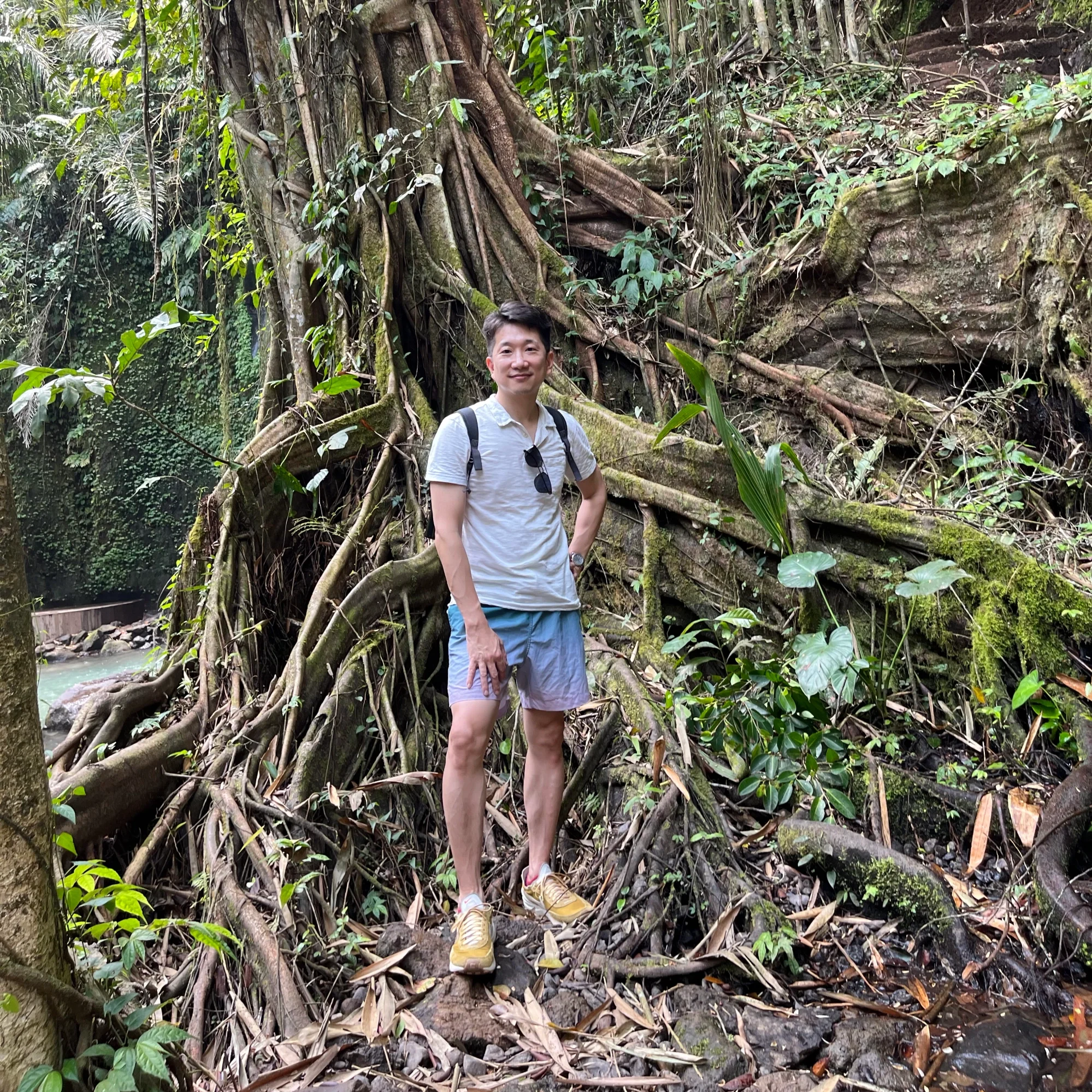
Claudia Marzollo and Georgia Katakou speak with Anton Hur about his translation of Park Seolyeon’s Capitalists Must Starve (Tilted Axis, 2025).
Anton is the author of Toward Eternity. As a translator, he was double-longlisted and shortlisted for the 2022 International Booker Prize and a finalist for the National Book Award.
We discuss translating regional differences in dialect, preserving the texture of a text, the miracle(s) of translated literature, and the politics of translation.
[Photo credit: Anton Hur]
Claudia Marzollo: Thank you so much for meeting with us Anton. As an introduction, could you talk to us about how you came to translate Capitalists Must Starve, and about whether your approach to this text was any different compared to Magical Girl Retires, Park Seolyeon’s first novel to be published in English, which you also translated?
Anton Hur: So when I take on a book I consider myself not taking on just a book; I always say that I don't translate books, I translate authors. And Park Seolyeon was an author that I've wanted to translate for a long time. In fact, I wrote a little bit about her in the Korean book that I wrote about translation, as an example of an author that I feel like is the perfect Korean author: she is an extremely good storyteller, a crystalline stylist when it comes to prose, and has just this joie de vivre where she radiates charisma in person. So I always thought of her as a really great author to translate. All of her books are very different from each other. Which is a fun challenge for a translator, to be able to skip genres like that, and I like doing that. The reason Magical Girl Retires was the first book to sell was… it was just the first book to sell. I did samples for Magical Girl Retires, Capitalists Must Starve, The Work of Martha and My Hormones Made Me Do It, and also Me, Me Madeline, and Magical Girl Retires happens to be the one that sold first. Technically I think Capitalists Must Starve sold before Magical Girl Retires, but there were many delays in the publishing process, which is why it came out years after it was sold. So the order in which these books were translated/published has nothing to do with me. It really has everything to do with how the industry works, and what the editors decided to acquire.
Obviously there's a difference in genre. They have very different vibes in the sense that Capitalists Must Starve is a historical novel and it's also presented in a very modernist style. There are no quotation marks in Korean. I put quotation marks in for the translation because sometimes I feel that not using quotation marks is much easier to do in Korean, but in English it can make narration sound like dialogue and dialogue sound like narration, at least in the style that I translate. I thought it would just be distracting and annoy the reader. So I put in quotation marks, which is something I didn't do, for example, in I Went To See My Father by Kyung-Sook Shin, which has em dashes so you can get away with not using quotation marks.
Magical Girl Retires is told in a very conventional narrative style. Stylistically, it's very conventional: quotation marks, a linear plot, a traditional structure with introduction, rising action, climax, falling action, conclusion. So, stylistically, it is a more conventional book, believe it or not, compared to Capitalist Must Starve. I also got to be a bit more ironically funny when it comes to Magical Girl Retires because I could make the narrator not cynical, a bit sarcastic and a bit of a smart Alec, which is always fun to translate. That’s also what I did for Love in the Big City. Whereas for Capitalists Must Starve the main character is what we call a close third person. It's not quite a first person narrator and, while she is humorous, she's more earnest than humorous. She has a very different voice and a very different vibe. I think it's the vibe of the main character that is the biggest difference.
Georgia Katakou: This leads us perfectly to our next question, which is specifically about Capitalists Must Starve and translating the tone and language of the novel. The protagonist travels quite a lot and interacts with people from different areas and different socioeconomic backgrounds. We're wondering if there were any regional linguistic differences that you carried through to the English translation.
Anton Hur: I'm aware that this is a site of contention for literary translation, and my personal take is if it doesn't serve the story or the extended metaphor of the book, there is no reason to mindlessly adhere to the way that things are written in the source. I think there have to be other ways of preserving the flavor and the texture and otherness that certain cadences imply. Usually in Korean literature, regional differences in dialect imply a class difference, because certain regions are discriminated against in Korea compared to others. For example, if you are speaking in a Seoul accent, which is considered standard Korean, and there's another character that's speaking in a South Jeolla province accent, then while a regional difference is very apparent, what is implied is that there's a class difference because the Jeolla provinces have been discriminated against economically and socially for a very long time. So for example, one character speaking more politely to another will be implying that they are of a lower social position than the other person; very educated people can speak in very high register, which is what I try to make the educated armchair socialist of the story sound like, and I can get away with giving a bit more of a rougher texture to Juryoung, who does not come from that background. It doesn't matter if she doesn't sound like she's from Manchuria or whatever because that’s not really relevant to the story. What's relevant is that she is an ordinary woman who comes from nothing, and these labor activists that she's working with are more educated than her and yet she manages to hold her own against them. That's the important dynamic that needs to be preserved in literary translation.
Claudia Marzollo: That's very interesting. In Italy too, the regional dialects and regional accents have historically been connected to prejudices of class and social status.
Anton Hur: Yes, and there are other ways of doing it. If you take Italy for example, I didn't know anything about those differences, but when I read Elena Ferrante's Neapolitan Quartet and she occasionally references the fact that they are speaking in Neapolitan, and that Lenù has to mask her accent when she goes to Pisa, while Lila makes fun of her for trying to sound like her professors, it all makes sense. So there are other ways of portraying that, and I thought the translator Ann Goldstein did that really well because I could get the feeling of her embarrassment, of her trying to hide herself and how defiant her friend was. There are these just little words that you can slip in here and there to create that kind of feeling and that kind of atmosphere because this is an experience that's shared all around the world. People in Italy and people in Korea have the same experience of being discriminated for their accent, so I feel like this is something that actually translates really well instead of being impossible to translate.
Claudia Marzollo: Absolutely, that makes a lot of sense.
Can you talk a little bit about hunger, which is quite an important theme throughout the novel? Our attention is drawn to it instantly by the English title, Capitalists Must Starve, of course, and there are passages throughout the novel that deal with hunger in a very striking way. One of my favorites is at the very beginning, where she compares her starving body to this dead tree and she's imagining herself being turned inside out. It’s such a brilliant passage. What was it like to translate this very embodied, very intense experience?
Anton Hur: It's very difficult to translate hunger. It is impossible to make someone who has never really experienced hunger to understand what hunger is like. We lived in Ethiopia for a bit and I remember when we came back to Korea, I wanted to eat everything in the supermarket because there were so many things that just weren't available in Ethiopia. I was so euphoric about how there were so many different kinds of things to eat, and how we had money to buy them. My husband is Thai, and when we visit my parents, my dad who is a fluent English speaker always tells him: “You are so lucky to be Thai and to be from Thailand, because do you know that in Thailand they can harvest rice three times a year?”. We've been married for 10 years at this point, and my husband would always be like: "Why does your father always point that out to me whenever we meet?", and I would reply: "But don't you understand? That's what it feels like to come from a hungry country." Because it was only a generation ago when Koreans were starving and we were the poorest country in the world. So my parents still have a very vivid memory of not having enough to eat.
And my husband is familiar with my parents, but even for him it's difficult to imagine why would my father keep saying that to him, and what this big deal is about being able to harvest rice three times a year. The thing is, before we had modern farming practices, which was quite recently, in fact, again, a generation ago, you were lucky if you manage to get a harvest at all because just one fall of hail, one flood will ruin your harvest and then you're basically starving until the next year, if you can survive that long. That was what life in Korea was like.
So, it's just something that is really, really difficult to translate, not just in terms of language translation but also in terms of translating that experience onto paper. Park Seolyeon is very young, she is almost ten years younger than I am, and so she's never known a Korea that was poor, she has always known a Korea that was a member of the OECD essentially, and to me, anyone born during or after the Seoul Olympics is basically born into a first world country. They don't know what it was like. I barely know what it was like, but I do know what it was like. And for her to be able to imagine hunger like that and to express it in that incredible metaphor, I think it just speaks to her talent as a writer really. And if it was effective in English, I really have to give credit to Seolyeon.
It's very easy to translate a good author. Sometimes for example, Kyung-Sook Shin gets upset when in interviews I say it was very easy to translate her book, that I did it in a month. She asks: “Does that mean that my book is easy?”, but it actually means the opposite, it's bad authors that it takes forever to translate. With good authors, I don't have to do anything. Kyung-Sook Shin is like that and Park Seolyeon is like that. So I'm very, very grateful to these authors.
Claudia Marzollo: That's lovely. That passage at the beginning it's just so beautiful and effective and intense. I really love it.
Anton Hur: Thank you.
Georgia Katakou: I think it's so fascinating how your own family history and your experience is influencing your translation and the way you approach this novel set in a different historical moment.
Anton Hur: That's absolutely an element of being a translator. Just like actors draw on their own experiences and their own emotional memories in order to play a role, a part. They don't have to have experienced what is going on in the script, but they can draw from different experiences in order to express what is being expressed in the script. That's the challenge and the joy of being an actor. And it's exactly the same for translators.
Georgia Katakou: I think actually bringing in your own experience and your own emotions and your own passion for things as a translator ends up creating something really moving.
Your translation of Capitalists Must Starve brings regional, specific struggle to a global audience: what are your thoughts about the political potential of translation? How can the political process of translation affect a text's political impact in a different context than the one that it was originally written in?
Anton Hur: The best example of that I can think of is Human Acts by Han Kang, translated by Deborah Smith. This book is about a very specific incident in Korean history — the 1980 Gwangju democracy movement, sometimes referred to as the Gwangju Uprising. The true story of what happened in Gwangju on May 18th, 1980 was obscured within Korean society for 16 years. The Korean government just refused to admit that this is what happened, the American government was extremely complicit and to this day America has operational command over Korean forces. So we are de facto a vassal state. But there were people who saw with their own eyes what happened, there were foreign correspondents and journalists who were also on the ground and they documented things and smuggled canisters of film out inside their underwear or whatever, in order for the truth to be known. My parents happened to be in Sweden at the time, so they actually knew more about the Gwangju incident than Koreans in Korea because it was so obscured in Korea. The official narrative within Korea was that this was a bunch of North Korean spies operatives who created a riot in Gwangju, who were communists and were all killed, which is not true.
It was a proper democracy movement that came from the people who happened to be in that region and it was brutally suppressed by the South Korean forces with American complicity. So there were these two warring narratives for such a long time. Han Kang is from Gwangju, but her family left Gwangju mere months before the incident happened, so Han Kang has lived a lifetime with survivor's guilt. And when she wrote Human Acts, it was somehow her attempt as an author to set the record straight.
There have of course been other novels about Gwangju, and television shows. But Han Kang writing this book, and then it being translated by Deborah Smith, who did an incredible job and wrote a really great translator's note for that book explaining the historical background of the Gwangju incident, and also ultimately Han Kang winning the Nobel prize, that meant the entire world now saw that version of events as historical truth. It is now accepted that they were not North Korean spies or operatives. They were ordinary citizens of Gwangju and the Jeolla provinces. Literature did that. It created the corrective ultimate narrative. Of course, there were many efforts by many activists before that and the tide had turned in Korea and the two presidents involved in it were tried, and were sent to prison, and then taken out of prison and pardoned.
There is a spirit of democracy that exists all around the world. People are always asking me about what is lost in translation, what are the differences between the source and the translation, but what is interesting to me is what is found in translation. What we have in common is much more interesting to me than what we don't have in common. It always feels miraculous when I'm reading a novel that's set in Naples or a novel that's set in South Africa, and I can understand immediately what those characters are going through. My body understands it, as well as my mind. To me that has always been the miracle of translated literature, yes, but also of literature as a whole. So I think that is really what translation can do, and to deny that translation can do this is to deny that literature can do this.
Claudia Marzollo: That's really beautiful and beautifully put.
In connection to this, would you be happy to talk a little bit more about what you feel your roles are as both a writer and a translator in today's political climate? And what are some of the things that you do in your practice that feel the most political?
Anton Hur: I think obviously for a writer and for a translator your first obligation is to the truth and it's also to be honest. Your first obligation is to listen really well and listen very closely, and to try to understand very carefully where something is coming from or how something is. Some people will call this political. I certainly think that it is a form of politics. There is a George Elliot quote about literature doing nothing if it doesn't enlarge the sympathies of humankind, and I agree with that. I think literature teaches us to listen and to listen carefully to the voices of others, and to the pain of others, and the suffering of others. I think that kind of listening is really, really important in an age where everyone is on social media, and there's such an emphasis on expressing yourself and on creativity. But listening is so much more important than speaking. I think in that sense literature becomes something extremely political because when you're listening to that, you're not listening to or perpetuating propaganda and propaganda is what all the establishment powers want you to express. Obviously there are other things. Obviously all writers should be protesting for Palestinian rights and against genocides around the world. To me it’s such a given to be politically active and to speak for others when their voices are being silenced, and to uplift their voices with the platform that you have. This is something so basic to me that at one point before we got married my husband and I had an argument because he was afraid for me, and he noted that I didn’t have to say certain things on camera, and I replied that he knew who I was when he met me. This is what being a writer is, you can't tell me not to speak out, because that's like telling me not to be a writer. There was never a shred of doubt in my mind that this is the kind of person that I wanted to be, and that this is the kind of work that I wanted to do. All the writers that I looked up to, as a child: Toni Morrison, Barbara Kingsolver, George Elliot, A.S. Byatt, they're all unafraid to speak exactly what's on their mind. When they see injustice and when they see untruth, they point it out because that's what language is supposed to do. And when you don’t do that, you're not a writer.
Claudia Marzollo: I think you are doing that really well.
Anton Hur: I think we all fail, so it's all a matter of figuring out how to fail in a more interesting way.
Georgia Katakou: That was wonderful to hear! We both loved your essay for Wasafiri “We Have Arrived” on Han Kang’s Nobel win, and I was really moved by the way you present translation as a miracle. Quoting directly here from your essay: “a miracle I have the privilege of partaking in every time I sit down to translate”. Your love for the written word and translation comes through unmistakably in what you write, including your novel Toward Eternity, which both Claudia and I really enjoyed. So we wanted to ask what brought you to translation in the first place? What keeps bringing you back? And what are the changes you would like to see in the publishing world today?
Anton Hur: What brought me to translation is an accident of birth really. My parents worked overseas a lot, so I was put into international schools and we would come back to Korea after every two or three years to live in Korea for two years. So I wasn't like immigrant children who move once and then they live in their second country for the rest of their lives. I would live in Korea, live somewhere else, come back to Korea, live there for a few years, go somewhere else. So, I had a perfectly bilingual education where I had a Korean education whenever we lived in Korea, and an American style international school education whenever we lived overseas.
When you live a life like that, and this is true for immigrant children too, you interpret for your parents, you translate for your parents. Not that my dad needed interpreting, but my mom certainly did. At some point people started paying me money for it. So I essentially have had this job since I was 12 and now I'm in my 40s. That's what brought me to translation, just the fact that it seemed to be how I created worth in the world for other people.
I'm very happy to do that for the time being at least. What keeps bringing me back to translation is that I am just so intrigued by the authors that I work with. That's what it comes down to. There's always a novelist or a poet that I want to work with, and I think it's the people really that keep bringing me back to translation. Also, now that I've translated so many books, the money also isn't too bad either, and I just bought an apartment so we have to keep paying for it.
As for changes I would like to see in the publication industry, I would like there to be more ways for young people, especially for emerging translators, to have sustainable careers, and more pathways to success than we have now because a lot of it hinges on luck.
I had a very nice phone call with Shanna Tan yesterday just to catch up and she was telling me that she's going to essentially be publishing a book in a third language, and she's going to add a fourth very soon. At least three languages, is this what it takes to be a literary translator in 2025? I'm very happy for her, but not everyone can be as excellent as Shanna or as talented as Shanna. And it shouldn't require that much talent and that much work, because she works so hard. There should be room for people who are passionate about books, and who can bring the books into the market. And there are still way more authors than there are translators, and way more books that need to be translated than not.
There has to be a way to make things easy for early career translators. More opportunities to pitch, to do samples and to network. I think these will be the things that we need to focus on in the industry in the coming years.
Georgia Katakou: Congratulations on buying an apartment!
Anton Hur: Thank you.
Claudia Marzollo: We always ask the same two questions at the end of our interviews. We're building an online bookshelf of books recommended by translators. So we’d like to ask you: is there a piece of writing that has guided you during your translation work, or an idea that you keep returning to?
Anton Hur: You have to realize I did not come up through academia. I do have a master's in literature but that was when I was an adult, and I was a translator way before then. So I do not really have a touchstone for the work that I do as a translator. To me, this is a biological reality. It's not something that I learned from a book.
The novel Possession by A.S. Byatt was absolutely thrilling for me to read in high school because it presented a world where people lived by literature. They had all of these jobs that had something to do with literature. I read all of A.S. Byatt’s books and they all have people who are like that, so I kept returning to her works, especially Possession, because they presented the kind of life that I wanted to lead where people were constantly thinking and feeling and living and reading and that's the kind of life that I wanted. It would be really great to be rich, to be famous and popular and all of that, but to me, what I wanted more than anything else was to live a literary life and to live a life of literature, that was the richest kind of existence that I could imagine.
Of course, as she herself has taught me, there are other kinds of lives which are equally as rich, she loves science for example and I agree with her, but for me, literature was always going to be my thing. So whenever I'm in a hotel room in Geneva and there's nothing to eat because all the stores close at 4 pm, and I am wondering Why am I away from my perfectly handsome husband at home in a foreign country where the food has no flavor? the answer is, because this is what a literary life is. You are doing this for literature. So that’s the book I keep coming back to, because it showed me what this life was like. And it's a really great life. I can't complain.
Georgia Katakou: Is there a book that has been translated into English that you recommend for people to read? And what is a book that has not yet been translated into English that you think should be translated?
Anton Hur: The number one book that I recommend people read from Korean literature that has been translated into English is The Girl Who Wrote Loneliness by Kyung-Sook Shin, translated by Hayun Jung. This was before Kyung-Sook Shin became my author. This book, I still believe, is the most important Korean novel to be published after the war. It encapsulates post-war Korea perfectly. It's the story about a girl from the countryside who leaves her parents behind and she comes up to Seoul with her cousin where she becomes a factory girl by day and goes to school by night to earn her high school degree. The union in her factory is oppressed, and there’s union breakers, and at night school she's discriminated against by the day school students. So it’s a very hard life, but she manages to get her education. And there's so many parts of it I really like because she is so hungry for knowledge and so hungry to become a writer. There's a scene where her older brother understands that, so he allows her to go to college to study writing and she afterwards becomes a famous author.
It's very clear that many details in this book pertain to the actual author, this is generally the shape of what her childhood and what her growing up was like. But it's also the story of Korea as it grew out of the ashes of war and became the economic powerhouse that it is today, and it shows what was the price that we had to pay for this prosperity. It really perfectly encapsulates Korea as a country and it's just so beautifully written and perfectly translated that, if you have to read only one Korean book, then that's the book that you should read. Please read more than one Korean book though!
A book that hasn't been translated into English: there is a 20-volume novel called Land by Park Kyong-ni and a translation of the first volume I believe exists. It's like okay that exists but the complete edition has never been translated into English. The complete Japanese translation exists thanks to some very intrepid Japanese translators, and for the past six years I've been trying with a certain publisher in the UK to put together a team of translators to handle Land so that we can translate all 20 volumes because this is one of the most important works of Korean in fiction. It's hard though, and the rights funding fell apart, and it's just one of those things where you just keep at it and keep at it and keep at it and the financing just doesn't come together, and the rights just don't come together. People are constantly asking why doesn't anyone translate it, but if only they knew the effort that we are putting in behind the scenes to try to, there is a lot of invisible and unpaid work, but we still try to do it. Now the rights are in limbo apparently, and there's nothing we can do, even though the project is ready to go because all the translators that we have in mind have said yes. It's just funding. We're missing only one piece of the puzzle, and at this point I am wondering if it’s gonna be a project for the next generation of translators, because I've tried for almost 10 years.
Claudia Marzollo: Hopefully it'll get done sooner than the next generation and everything will come together. It sounds like a really exciting project.
Thank you so much. This was really great and inspiring and it was great to talk to you again.
