
Talking with Sophie Lewis
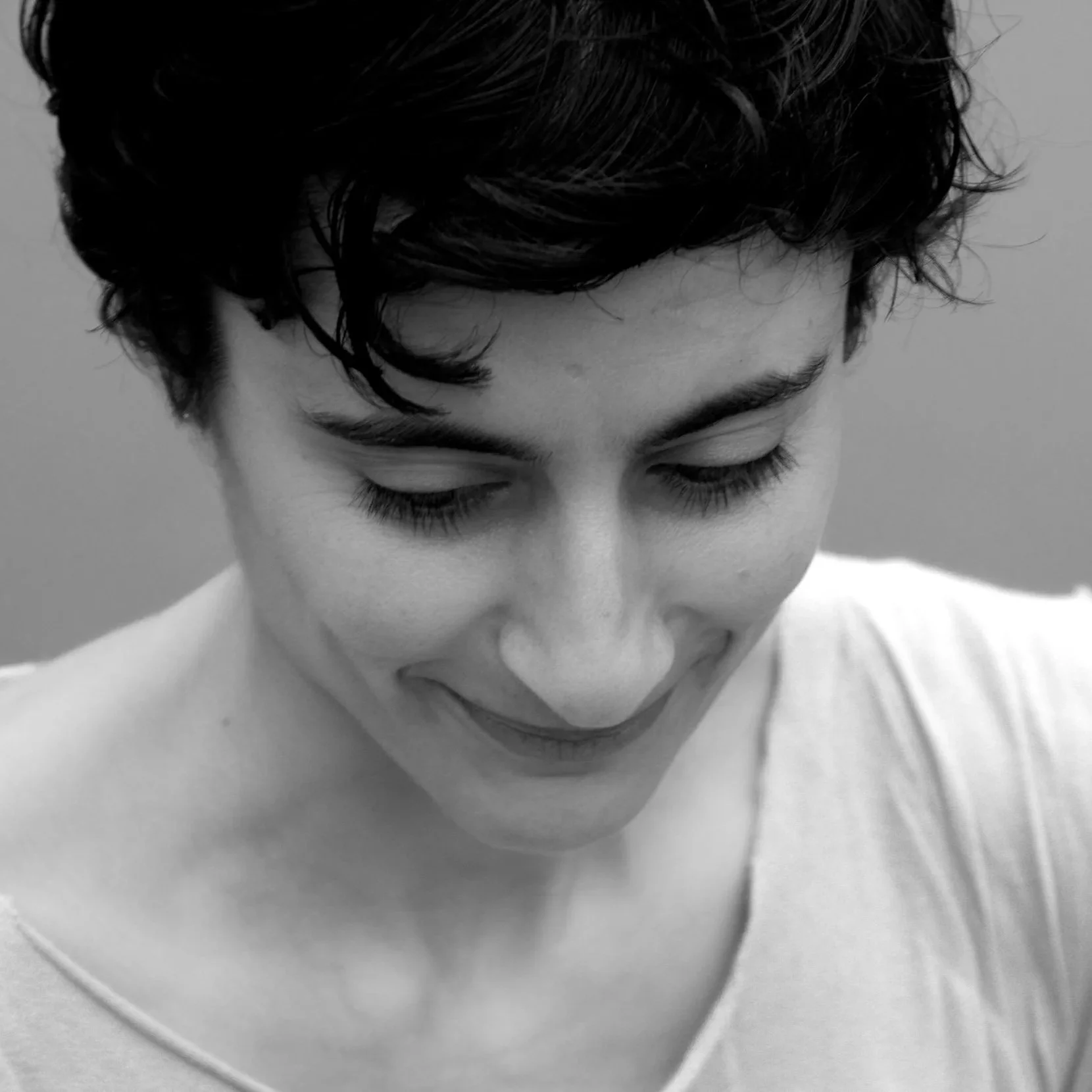
Kate McNamara and Georgia Katakou talk with Sophie Lewis, translator from the French and Portuguese, about her translation of Hélène Cixous’ Angst.
We discuss ‘difficult’ texts, re-translation, and translators’ notes, as well as the types of research translators engage with, the broader work of Hélène Cixous, and the politics of translation.
Kate McNamara: Could you talk to us about your relationship with the book Angst, and how you came to translate it?
Sophie Lewis: I was invited by Silver Press to translate Angst. Sarah Shin, my editor at Silver, told me that she had seen a copy of the first translation of Angst, and realized that it retailed at a very high price in the sense that it's a rare book. It was not even republished after that first edition and that intrigued her. So she went down a path of discovery and came to the point of realizing that a new translation was the best way to go. And then from my point of view, I just received an email saying “Would you like to do this?” and I said yes because I had no question in my mind.
I later discovered that she did ask around a bit and I think I was recommended. I think I have something of a reputation for being foolhardy with officially difficult texts. I do really like to engage with difficulty in the formal sense. How to strategically get to grips with other people's formally very difficult texts is something that I engaged with specifically while at university and have been really interested in since. It's not even about degrees of difficulty, it's types of difficulty. What do you do when faced with this and having to recreate it in English? So I have some people to be grateful for, who were behind the scenes and who said Sophie would like to do that.
Kate McNamara: It's a pretty nice reputation to have!
Sophie Lewis: I guess the point is you can always say no, but it's too much of a temptation.
Georgia Katakou: Angst was also translated by Jo Levy in 1985. Did you read or refer to this earlier translation at all?
Sophie Lewis: I tried to buy my own copy and couldn't afford it. So I borrowed Sarah's and it was very, very carefully hand-delivered to me. As a book it’s quite unassuming, a paperback, but also quite intimidating, imposing. Just the cover is not happy. [Laughter] It's striking and beautiful but not strictly happy. I had this copy on my mantelpiece and looking at me throughout the first and second drafts, right to the end. My rule was, I was absolutely not looking inside until at least the second draft was done. I still haven't done a complete read-through, but after that I allowed myself to dip in and compare, and see the ideas that Jo Levy had been working with, and her solutions. There’s a little bit of inspiration for sure, but also a bit of a contrast. It was really interesting to see what she did and a huge relief to discover that actually her translation was very different to mine throughout. The whole approach was different and I was glad to find that we naturally differentiate and that's one good reason to re-translate.
But also, it's an excellent translation! It's not one of those cases where this book really needs to be done because the first job was terrible. It was absolutely not that! It was a really excellent translation and some parts and passages were really just stunning. But I think that her strategies were so different in the sense that she seemed to feel freer to make more narrative sense than I felt able to do in my work. I felt that I was much more beholden to Cixous. I felt really like I owed her the most faithful, and that's to say very closely faithful, translation I could possibly make and I think therefore if you want to get closer to what Cixous was doing, read mine because I think the experience will be more similar to reading Cixous in French. That was an interesting thing to discover in making that comparison as I worked.
Kate McNamara: I'd be so fascinated to see both copies alongside each other now with the French original.
Sophie Lewis: What would be really great – and I don't think the rights situation would allow this – is if someone were able to reissue Jo Levy's translation and carefully distinguish it [from mine]. Publishing is complicated, so to have the two with the same title would be terrible, but it would be so lovely to have it currently available and for people to be able to choose, or even those with most interest to buy both. It would be amazing, but these are not our times.
Kate McNamara: Even seeing little paragraphs against each other…
Sophie Lewis: Yes, I really agree. I can send you some for your interest. [Sophie shared a side-by-side demo, which you can read here.]
Kate McNamara: You touched on the idea when you were talking just now about how renowned Cixous is for being difficult to translate. Cixous herself speaks of trying to get to the ‘shimmering heart of the French language’, and Derrida says that Cixous’s ‘texts are translated across the world, but they remain untranslatable’. He continues to say that he and Cixous ‘are two French writers who cultivate a strange relationship, or strangely familiar, familiarly strange (unheimlich) relationship with the French language – at once more translated and more untranslatable than many a French author.’ You said that you love the challenge, and you're excited by the difficulty, but were you also intimidated by the prospect of translating Cixous? Or perhaps by the history of Cixous’s work?
Sophie Lewis: Various factors came into play, some of which I anticipated and some that I didn't. I was very aware of Cixous as a real icon of literature and literary theory. It's a massive honour in the first place to be asked to translate her work and to have the opportunity to do that. There are some excellent translators who have worked regularly on her writing and who've done incredible jobs, and I was not sure if I was ready to join their ranks, but you can only know by trying. So, one of my big, key approaches is just to do it, always, with every translation. And once you've begun, you learn what it is you need to know. Because, the way I work at least, when I get to the end I'm very far from having finished the translation. I always go back to the beginning several times over, sometimes lots of times over. So the process is the process of schooling myself in what I need to do and how I need to approach the book, and I try very hard to trust in that.
In the process of translating this text, while that did happen, I did also manage strategically to work out how I needed to handle things, including how dialogue is represented – which is to say: in very different ways, lots of different things all intersecting, how pronouns move around a lot all over the place, who is doing what to whom, how can this be multiple? These sorts of things I did work out bit by bit as I went through, for myself.
But then, non-textual things happened! Cixous is absolutely still writing, still amazing, still running seminars, still very much in control of her output and legacy, and she has a few gatekeepers too. One of them being the very eminent and brilliant publisher des femmes, who published this book originally in France, in Paris, and who continue to publish most of her fictional works. I think they are more concerned than she is about what might happen in the process of translation. So they were keen to see a sample of my work, and when they saw it, they said: "Yes, this is very good, but we must fix the punctuation,” and they went through and changed my punctuation as far as they could back to hers, which was disturbing to me. I have a good relationship with the people at des femmes and I really admire them, and at some point, we'll sit down and talk about this. I really feel it needs a face-to-face conversation, not one over email. But for me, if you translate, you translate the work, the text, and the text includes its punctuation. The punctuation is part of the language, and it's different between languages, and it's different between different stylists. Cixous’s punctuation is not standard French punctuation, but it's very much not standard English punctuation. So in order to recreate it I had to make new choices, but I had this massive, tacit, unspoken pushback from her publisher, and I had to manage expectations. I had to say: “Look, I understand the need to be precise and to match and to follow and be faithful, but the punctuation is going to change. It just will be different! It will be matching but different.” So that was tough.
It would have been lovely to talk more to Cixous herself. She had a look through, she also asked some of her translators to have a look through, which is not something that I've had happen to me before. But again, I understand, she's got a need to control, because the output is so precise. And yet you can't be in control of all the different languages, and all the different works, and all the publications. There was a sense of control from many parties, and I had to just reassure and reassure everyone, and then still produce what I thought was going to be the best version of it.
Kate McNamara: It sounds like a terrifyingly intense translation experience to me.
Sophie Lewis: It was honestly hard at times, but also really interesting. These are the practical concerns. She is a super-eminent author and she's not dead! So it was not a field day, very much not.
Kate McNamara: I can understand that… In some ways I find the freedom of translation mindboggling: that you can approach a publisher to request to translate a work, and the author has no real say in who's translating the work or what happens to that work in other languages. It is quite surprising, this lack of control, but then the idea of translating a difficult work and the kind of control you’ve been speaking about coming at you must be another thing.
Georgia Katakou: As a reader you don't think that much about punctuation and it's really fascinating to hear about both this very technical aspect of translation and, at the same time, how much you have to advocate for the choices you are making. I would love to read more on the choices you made for this text!
For your translation of Noémi Lefebvre’s Blue Self-Portrait, you include a translator’s note that is largely there to explain how you chose to translate one specific word - ‘désinvolture’, which you translate as ‘not-caring’. There’s no translator’s note for Angst. If you had written one for this work, what would you include in it?
Sophie Lewis: That's a really nice question. I have been lucky — largely thanks to Silver Press for putting so much into this publication — to talk to quite a few different people about Angst and about the process of translating it, and I suppose I've developed something of an oral translator's note series in the process. Not a lot is written down, but I have developed ideas. One of them is that I think it's okay as a translator to feel that the writer is talking directly to you. Quite often as readers you do feel — and this is part of the magic of reading — that you are being spoken to directly by the writer, and you are! You are alone with the book and essentially with the writer's story. But I feel that as a translator, there's something surgical, you're kind of inside the body of the text. And I felt that Cixous was giving me clues about how to do the work while I was translating it. Every time I say this, it gets more esoteric-sounding. [Laughter] There's a lot of apostrophe about not understanding in this book. There are many whys. There is a lot of: Why is this happening? Why is this situation as it is? Why are my communications not happening? Why am I abandoned? To God: why have you abandoned me? But also in a very human sense: why is my love not here? And for Cixous: Why is my text so difficult? Why am I in the middle of it? Why am I not flowing through it? Why am I in a swamp of tongues? And the answer is: because you're in a swamp of tongues! Because you've got languages and you're trying to work out what to do with them. There's another part where the speaker feels she has been given a car and the car represents speeding to the lover. And yet somehow, the car won't work, or she doesn't fit in the driving seat, or she's got too many car keys and can't work out which is the one that fits in the ignition. And I suddenly read, "Oh my god, too many keys." Yes, this book is full of too many signs! Calm down, she knows what she's doing. You don't have to know which key, you just have to try one out. This is strategic. Of course, Cixous wasn't writing the book for me or for it to be translated by anybody, but the keys to the translation are in the book, nonetheless. So, I suppose it's back to process, really. It's just back to relying on a very deep and close reading and not thinking you can second-guess the book. You can't decide: “It's about this, so I'll just make it all about this," and make the sentences link up. You have to go back to the text, back to the text, back to the text, and it will continue to talk to you, and your task is to make the sense that’s in there. So that's something of my translator's note, hopefully put in a much more elegant way.
Kate McNamara: Georgia and I were talking as we were reading the text and at one point we did think we should read it more like poetry. It felt like it was too hard to keep hold of everything in the text, and perhaps a better way to experience it would be to flow with the tide of the words. So this idea of there being too many keys really captures our experience of reading Angst.
Sophie Lewis: Yes. I think that's right. I mean, it isn't poetry, but it definitely can be read like [poetry]. Or just that reading approach to it can really help.
Kate McNamara: Like you said, I found myself trying to grab on each time. Where am I in this?
Sophie Lewis: You're only on the page, that page!
Kate McNamara: Exactly! I had a question. I was reading an interview with you about your translation of Thérèse and Isabelle by Violette Leduc, and you talk about the research that you sometimes have to do as a translator to make sure that you get the specificities right. For that translation, you ended up calling a Canadian Catholic boarding school to talk about the right words to describe the pupils’ living spaces. I’d love to hear you talk about how much time you spend doing research around the texts that you translate?
Sophie Lewis: So I have two types of research. One is to try and get a book list from the author. I didn't want to ask Cixous for that. I thought that might either be a slap in the face – You idiot, have you not been reading me all these years? – probably nicely put, but essentially that. And I have been reading some of her work, but not enough. So I just made my own reading list, which is to say I sank back into more Cixous translated by other people, while translating this book. So I think it's good to be in the reading world of the text or the author, in some way or another. There are also some intertexts in this book. Some of them are quite clear and you can find them quite easily. There's a lot of Kafka’s journals. So I got an edition of that from the library and just read more of that. There are other things which I know less well and couldn't find in books. One thing I could find, which was great, was John Donne's sermons! That's somehow at first unexpected and then very obvious. We've got ‘Death's Duel’ in there and then a few other things. Reading Donne, reading Kafka, this was great. I can't read German Lieder, these are in there, too, but there's a lot that I was not going to find or easily access to read.
The other research, the kind of technical circumstantial stuff, I tend to wait until it bites me on the bum and says, if you don't know about this, you can't translate it! In this book, that really happened with communication technology of the 1960s and 1970s. Telegraphs, telegrams: what is the difference, how do they work, what's the terminology? There is slippage between those words, and in English it's different from French. There have been systems of hydraulic post within cities where you can put a letter in a tube and it pops up not just in your office building, but somewhere else — a few office blocks away, it pops up and then some secretary carries it to the desk of the boss. These kinds of things were in operation in Paris. Communication – really failed, botched communication – is a big theme in the book, so I really wanted to get my technology right. That's one where I actually did the classic kind of research where you look into the historic situations, and the words, and the jargon for those things. It's always really satisfying, but you can't anticipate those things. You just have to find yourself facing something that is alien like that. And like the Canadian boarding school..
Georgia Katakou: This sounds fun!
Sophie Lewis: Totally. I mean, these are the incidental joys of translating. I hadn’t been planning to reread Kafka just then. What a great opportunity. It's lovely!
Georgia Katakou: You already referred to this a little, but one of the things I found striking in Angst was the language of the text and its fluid relationship to gender. Cixous blurs the boundaries between the abandonment the protagonist experiences by her mother and the abandonment by her lover. This also shapes the language of the text with disorienting passages such as: ‘I don’t know if the one I love is my mother because I birth for him or because he’s the one I would not die without. All my deaths are his fruits, for him to enjoy, that’s why he’s my mother.’ (p. 38) Did the gender-bending language pose a challenge in translating passages such as this?
Sophie Lewis: Yes, this was a huge challenge. I kept making decisions and then scrapping them. Sometimes bigger scale decisions where I'd say throughout this book there's no “one does this” and “one did that”. None of that. And then I went back on myself and I said: "Actually, that's ridiculous. This will not function if I don't use ‘one’." And then I decided the narrator is essentially female, fundamentally female, and I stuck to that. If in doubt: female, which is quite a nice reflex for this context. That was one thing I could stick to. But in terms of deciding the actual nature of the interactions and the self-positioning of the speaker, a lot of the time it was my decision and it had to be, and sometimes it differed a bit from Cixous in the sense that I felt there was a consistency that we needed in English that she didn't need. Sometimes it was really just my call, which comes back to the freedom of the translator that you were mentioning, Kate. A very nerve-wracking thing to decide. And there were times when I read Jo Levy's translation for this reason: who does she think is doing what and to whom? Sometimes I agreed and thought: “Yes, she's found what's happening here, I can see slightly more clearly”. And other times completely disagreed and recast it in the way that I saw it, which is to say it's addressing the mother, or it's addressing God and this is masculine or it's God but it's female. Every different version happens in this book several times over. Every different way around occurs. This is one of my troubles with this book: it could have been different and I see that it could have been different. It's not just that a different translator would do it differently, but I would also do it differently if I could publish two or three versions of it. I would probably make different decisions and see how they functioned in a flow through the text. And I did try that, but every time you tinker with one it ripples out and it's a very dangerous business to start tinkering late in the day. So we have a version of Cixou’s Angst here. I don't think anyone would say it's wrong.
Kate McNamara: You're reiterating something that is known, that I know, but hearing you say that feels wild. It’s so wild how many different versions of a translation there can be. How many different translations there can be of a single text. And then how little it's thought about and how little these other potential versions are brought into conversations about the books we read.
Sophie Lewis: Yes. When I was not working on the book, but just thinking about it, wandering around doing other things, I did have a big think about what this is for. What is this confusion, what are these profusions of signs, and less than usually anchored actions? What is it for, what’s it doing? And I do think, in this case, this is Cixous really for the first time acting on her manifesto of “The Laugh of the Medusa”, and this is her version of écriture féminine coming out for the first time. This is fighting against all the strictures of logic and grammar, as set up by men over several hundreds of centuries. It’s the first expression of it and I think it's a lot wilder than some of her later writing. For that reason, I think it's really an explosion. I think several of the texts around that time that she was writing come out as an explosion. It was also the mid to late 1970s and then the early 80s and that explosion was really needed, so it's a part of that too.
Kate McNamara: Beautiful. As you're speaking I find myself wishing that there was more of your interpretation of this book out there.
Sophie Lewis: I think I probably will try to write something, if I get the time. Some of these ideas seem like they're worth putting down. I did run a workshop at King's College and that has helped me crystallize some thoughts about it, too.
Kate McNamara: I found the introduction by Jamieson Webster, which was also just published at ‘The Paris Review’, quite intimidating. As an entrance into the text, it felt quite full-on and hearing you talk about it feels really exciting.
Sophie Lewis: That's really interesting. I feel that that introduction does something really big and helpful, which is it opens the talk about psychoanalysis and Cixous. I think she [Jamieson Webster] wrote under the influence of Cixous and was expecting probably to be reigned back. And then Silver Press said: "This is great," so it went straight into the book, as it came. It possibly is quite a big way in, which doesn't suit everyone. I actually really want the introduction to have a massive subtitle saying “read this afterwards”. That's my feeling for almost every book, really. I think introductions should be saved until after, but that's my personal feeling. I just think it's not the way the author started the book. Maybe I'm being a bit fundamentalist here.
Kate McNamara: It pre-articulates your experience of the text as you're going into it and with this text it made me nervous. I don't know a huge amount about psychoanalysis so it made me worry that I would struggle to get into Angst.
Sophie Lewis: Nor do I! It's a learning one.
Kate McNamara: Building on your experience of this translation and how it felt, we have a question relating to something Cixous shared in an interview with the Paris Review, where she describes how: ‘I don’t really think. When I think, I think-see—the staging is always at work’. Did this experience of translation feel different to other translations that you've done? Did you feel like you had to enter in a different kind of state or did it still feel quite methodical and connected to the text?
Sophie Lewis: I think there's something quite powerful about the paragraphing in Angst, or rather the sectioning off of different parts, that is really subtle and not standard. There are two sections in the book: there is a first half and a second half, and the break is not exactly halfway. I'm not sure exactly where that lies, but there is a change of tone and emphasis in them. But otherwise, it's really a big breathing space, that second half start. Other than that, there are sections that break without headings, without anything else telling you what is going on. There's no way-marking. Some of the gaps are bigger than others, some are one-and-a-half lines’ size or two-and-a-half lines’ break size. So the typesetter had to be really nimble and break their own rules, actually, in order to match what Cixous was doing. And I think there's something about those breaks that gives you the illusion of control. It makes you think something has come to a temporary small conclusion and then the next bit begins. Is a breath being taken, is a head turning from here to there and looking at a new scene. There's a slight newness and I think that for me it was almost like time to close my eyes and then open them again and find myself again in the text. There are some books that are legendarily non-stop, genuinely non-stop: pages and pages and there's no paragraph and there's no chapter break or anything. In some ways that's harder, even when the texts themselves are “easier”, because you can't stop and you can't even stop at the end of your working day. You literally have to go stop now and you have to force yourself away. There is nowhere to just take a break. Whereas with Cixous, I was allowed to take those pauses with her and then re-engage and that was really helpful. I don't know about think-seeing and if my technique was very different, but I suppose I was taking some kind of bigger respiration pattern with the book and that allowed me to get quite as deep into it as you have to get when you're deep in those difficult parts.
Kate McNamara: Absolutely, I can see the importance of breathing in between the density.
Georgia Katakou: As a reader too, those pauses provide an opportunity to take a breath. Angst is full of bodily sensations and the references to the body were at times really overwhelming. Just one example here: ‘A cry of Suffering is burst from me, in my belly takes root, its claws in my bladder, the book opens, sentences piss out, rats gnaw through it page by page, anguish guts it like a fowl.’ (p. 6).
In a way the vividness and intensity of these passages also speaks to the quality of the translation. They were beautiful and very consuming.
Sophie Lewis: There's body horror in there, for sure! There's a lot of birth and there are a lot of monsters and very horrible skin sensation, lots of claws… Definitely it's not one that you want to consume in one sitting. Or feel too much in your own body for too long. Let it happen and then put it down.
Georgia Katakou: At the same time, when I got to the end of it I had such a feeling of liberation, or even catharsis. I felt this strongly when reading: ‘I passed god till I was sapped. In the end I coughed up love. I’d nothing left but my skin and soul. How clean I was, how purified, wrung out. To have lost my sight, my body, my belief; you are saved!’ (p. 259)
Sophie Lewis: Can I ask both of you a question then about the end? How does the little note that Cixous puts at the end strike you? This was not in the first translation. I suppose Cixous added it to future editions of the book in French. And I just wondered how it struck you. It's almost like a love letter to the publisher of des femmes, Antoinette Fouque. She’s the dedicatee of the book. How did you feel reading that last section?
Georgia Katakou: Initially, I wasn’t even sure whether the text had ended and we had moved on to a postscript. I kept wondering “Is this Cixous writing now?”, or “Is it the narrator writing to Cixous?”. Hearing you now talk about this does urge me to look a bit more into the history of des femmes and their collaboration with Cixous.
Sophie Lewis: You were a bit thrown because you weren't sure if it was still the text going on.
Kate McNamara: It feels different. There’s the page break, the italicisation, you realise this is a different voice, this is a different thing. But, there's no heading, there’s no contextualizing of it. So you don’t know!
Sophie Lewis: Yes, it's funny. I wish I'd met Antoinette. It might have been a big clue to things.
Georgia Katakou: The only clue for me that the voice was different was that it was italicized. I think it can have the effect of galvanizing the reader to look into Cixous even more, after finishing Angst, which is a great thing. It also is exciting to have Cixous’s voice come through even more explicitly.
Sophie Lewis: Yes, I really agree. For me it also meant that I did some more research and investigated des femmes as a publisher. It is also, as quite often in France, a bookshop. So I visited the bookshop and walked around the publishers' vision for a feminist bookshop. That was also great to do as part of the work on the book.
Georgia Katakou: We do these interviews as a way of acknowledging that translators know their texts so deeply. Angst can come across as an intimidating read, for all of the reasons that we have touched upon. So we're wondering if you have any recommendations for a reader that might not be sure about how to get into it. What would you say, as someone that really, deeply knows this text?
Sophie Lewis: That's a nice question. So I would say read the essay “The Laugh of the Medusa” first. It’s short, it's very clear, it's not a bad introduction to her style in the sense that it's also in this imperative rush, full of passion, full of bodily feeling, but it's very much about what she's then going on to do in the fiction. So, I think it's a very good introduction. Even though I think she's quite annoyed that the popularity and influence of the essay has to some extent overshadowed her work since, but I think there's no question that it was a turning point not just in her œuvre, but also in literary theory and in literary production and continues to influence so many people. So start with the essay and then, say you're turning to this book, I think you can take some principles through with you. One of them is that she cares a lot about dreams and that she considers dreams to be part of her writing life and writing to be part of her dreaming life, which is a very active, respectful approach to both. Without needing to know anything about psychoanalysis or even psychology, to approach with the kind of open mind that you walk through your own dreams I think can be really helpful. It's quite hard to cultivate that, but that means you can then think into the flow, worry less about what you think might be happening (in that very British, concrete need) and feel the impact of the words, as you were saying, perhaps in a more poetic way as a reader of poetry or as a reader of dream stories. I think that that could be really helpful.
Cixous is almost intimidating through her accessibility and her volume of production, but other than the essay, there's no rule about what you know of Cixous. Some people know only her plays; there have been some lovely recent books translated and some people only know those. There have been ebbs and flows of production, but there's no need to have read X and Y and Z about Cixous. Anything you read is a good place to start! You can't be talked at by a Cixous scholar; what you know is as good as anybody else's reading. And I hope that's really reassuring, because it's not true at all of lots of other literary theorists. Also, I really recommend the work of the other translators. If you feel reading in French is not the thing at all, do read the translations. They are brilliant! They are very, very good. Here I'm going to recommend the person who helped me most and that's Beverley Bie Brahic, but also Eric Prenowitz is very very good, and Peggy Kamuf, also very good. Very, very close engagement with her work and very brilliant wordsmiths, all of them. I think you can feel confident that you are reading great production. I don't know how else to reassure. You also just have to dive in at the deep end!
Kate McNamara: That's a really beautiful introduction to it. And I love the idea of this community of Cixous translators, helping each other out and engaging with it together.
Moving away from Angst, we've got a couple of more general questions about your other work as well. You work as an editor, writer and translator. You helped to set up And Other Stories, the fabulous publishing house. We also looked at your translation workshops with ‘Shadow Heroes’, which sound amazing. So I was wondering how those different roles interact and influence each other?
Sophie Lewis: I feel that translating and editing are very closely connected pursuits, the skills really overlap, there isn't really a point where I could say one begins and the other one has ended. I think they're very complimentary. And in terms of understanding the world of publishing, it's been really helpful to have worked as an editor both inside publishers and as a freelancer, in order to be a translator and not have mistaken expectations of how publishers work and what they can do. So practically that's really helpful and continues to be really helpful. When I translate, I usually produce a sheet of notes about my decisions and I send the translation along with that sheet of notes. Sometimes it's just a couple of bullet points. Sometimes it's several pages with lots of specific words and paragraphs about my tense choice and that kind of thing. So, it really depends on the book and what I feel needs flagging. I know that the publisher has a copy editor and a proofreader and possibly an overall editor who will also do their edit. And I know that this can be their guide and this will help them along and we won't have to have pointless discussions halfway through, explaining why this was my decision for this and this reason. I can facilitate the work better, having had the experience on both sides.
The workshops is an interesting one. I really like talking about translation and helping people do it. I don't think I'm a natural teacher. I do feel nervous in front of people. I'm okay to speak about what I know about, but classroom control is definitely not my thing. On the other hand, it's just too natural, there are so many ways of translating that are collaborative that eventually, if you pull the relationship apart a little bit further, you can become a teacher. Or, if you push it a bit closer together, you can become a mentor. Or, if you're closer again, you're co-transating. So all these things are quite natural if they come along and the circumstances come together and the material is right, or you have the material to hand and people are keen on it. I have used bits of a Master's thesis that I wrote about the translations of the story of Carmen through Prosper Mérimée’s story, into Bizet’s opera and then by Oscar Hammerstein II as Carmen Jones. Translation is big and can encompass different genres and disciplines and music as well as the written word. I've just had so much fun showing people a few things like that and inviting them to feel free and to try their own things out like that. It would be crazy not to take more opportunities to talk about it. It's not a sensible way of making a living to diversify in that direction, at least not for me. But it is complimentary and it's great to be thinking about translation with a bigger perspective.
Kate McNamara: Absolutely. It's not something at all that was considered in our school and in language teaching. Maybe in other schools it happens. And then I did languages at university and we did some translation papers but it was never in this fun, interactive, engaged, open way.
Sophie Lewis: This is exactly why I became a translator, in part because I had arguments with a university teacher about this precise sort of question. ‘Shadow Heroes’ happened because we realized that on the one hand languages are taught, on the other hand English language and literature are both also taught, but the process by which one feeds into the other and back the other way is weirdly absent, and the departments are very properly siloed in schools and then academia. But naturally they flow between each other, there is a flow and there's a natural interaction. For us at ‘Shadow Heroes’ it is also tied in with a sense of language propriety and being able to be a confident manipulator of language and do one's own translation in life, not necessarily only in literature. So we used to approach schools as ‘Shadow Heroes’ and say: “The English department can host it, but we'd love the French department to do the same”, or “The modern languages could host it, but we'd love the English teachers to show up”. And occasionally we'd be hosted by the classics department because they didn't have these hang-ups. It's a strange old situation that we've just come through to these very solid disciplines and they don't actually have to be so.
Kate McNamara: I'm all behind that!
Georgia Katakou: You just touched on this in your answer, but we would love to hear what brought you to translation in the first place, and what keeps bringing you back? And what changes, if any, would you like to see in the publishing world today?
Sophie Lewis: I'm going to pour tea while having a think. Seriously, it was in part arguments with a tutor at Oxford who I really liked and with whom we were doing French composition. He was strict but great, but French also, and he said: “You cannot start a sentence with ‘and’ you can't start it with ‘but’”. These are not proper well-formed styled French sentences. And I said things like: “Virginia Woolf started this sentence with an ‘and’ and that's what she meant to do!” It may be wrong in French, it was wrong in English! And these arguments led first to a standoff and then to my realizing that I cared quite a lot and needed to do some translating. I think I developed a bit of a hero worship of certain translators.
Kate McNamara: Can we ask who they were?
Sophie Lewis: Gilbert Adair, who translated Georges Perec’s La Disparition as A Void. That's an incredible feat. There you go: for a formal challenge, it doesn't get more on the nose than that. And what a job he did! And then I also read a book with a translator's note that really moved me and it was called Blood From The Sky by a writer called Piotr Rawicz and the translator was Anthony Rudolf. The note is about his work on the book and his salvaging the book through the process of the translation, and he also published it. I realized how a translator can be a champion of a book, not just a worker upon it, like a worker bee. Rudolf became a mentor, he has been a kind of guide to me since then as well.
I just thought translators were amazing! The bee’s knees, really. I introduced myself to people who could give me translation work. The people at the French Institute allowed me to translate little reviews and then they introduced me to a publisher who needed a fixup job, and then they knew me, so they gave me a book to work on next. It didn't exactly flow but things moved from there, bit by bit.
What would I like to change in the industry? I think – and it's controversial – but I actually really don't care about having translators' names on the covers at all. Controversial in the sense that as a translator in the community, I feel that I might be doing a disservice to a campaign that's quite dear to lots of people's hearts, and I do respect that and I can see the reasons for it. But I really think that the true respect for translators as authors comes in the contracts and in the royalties, which is to say, you share in the ongoing success of the book. And also in the subsidiary rights: sharing in further editions, in further territories, and in other genres and forms. I really feel that is very important and it's quite maddening when you work for a long time, to negotiate hard but respectfully, and come to an amazing deal with an initial publisher, and then realize somehow that they can sell your work to someone else and that someone else can do anything they want with the book and not pay you anything for it. That's pretty nuts! While the Society of Authors does amazing work helping translators to look at their contracts, I think the overall model, the sort of baseline that people are starting from, is pretty holey, not really fit for purpose.
I do wonder about territorial division, at least in the English speaking world, maybe in every language. It's one of those things that I'd like to sit down with a lot of people and talk about. Obviously, a publisher in a territory can do a better job in that territory than they can do in other territories. On the other hand, having agents squeeze tiny bits of money out of co-editions and publishers not making everything they possibly can out of a book because they've had to sell it in order to allow an edition to appear in a different territory, thereby being hamstrung and unable to profit from it to the max – and publishers have such tiny margins – this does seem to be a bit of a snarled-up, unhelpful situation. I'd love to talk about territorial division and whether it's necessary or how it could be done better. And I'm very far from an expert, these are just things that have recurred in my mind over the years, which I'll bring to the London Book Fair this week and see what people say!
Kate McNamara: I'm just going to get on to our final questions, which we ask for every translator. I'd love to know if there's any kind of sonic background to the work? Perhaps you had certain music playing on repeat whilst working on the text? I know often people work in silence. Do you associate any songs with Angst? Was there any kind of music going on?
Sophie Lewis: I have in the past, when fatiguing towards the end of a working day, put on gentle techno, soft volume, but something with a little pace and it keeps me from getting stuck in the long grass sometimes, depending on where I'm in a book. But if it's really the first draft and I need to push on and I need to stop worrying about it, that can be really helpful. For Angst, I did not listen to anything apart from the Lieder that she quotes from, which you can find recordings of, because I wanted to know what that sounds like. Other than that, I didn't listen to anything! This book has pace, there's no pace problem. Although there was plenty of long grass, there was no pace problem. And I think I was way too deep in it to even think about turning to a different medium to help me along.
When I was translating Colette Fellous, I compiled a playlist, while translating, because there was so much music in the book. I listened to all of it and it just seemed really right. So I put the songs together and allied them to the text. Les Fugitives, the publisher, put the playlist on their website and that all came together really nicely. But I don't have an official sonic background mostly.
Georgia Katakou: We are building an online bookshelf of books recommended by translators (perhaps one day it will become a Translator’s Library in some physical form). To do this, we always ask the translators in our interviews if there is a piece of writing that has guided you during your translation work, or a text or an idea that you keep returning to?
Sophie Lewis:Blood from the sky, translated by Anthony Rudolf. Such a fabulous book, that should be on anyone's shelves anyway! It's just a great, great novel and it's about a corner of 20th century world history which is less explored, I think. It's very brilliant and his [translator’s] note really finishes the work.
I've translated two books by Françoise Sagan and one of the works I consulted, but also just read like it was a novel on the beach, was Douglas Hofstadter’s translation of La Chamade by Sagan, which he called That Mad Ache. It’s a top-to-tail edition: you start on one side you get his translation, on the other side you get his blow-by-blow, quite long essay about the process of the translation. It's very, very brilliant and funny! And it's really good because in a way Sagan and this book are kind of B literature. It’s not pulp, it’s brilliant, great fiction but not super high literary and I just think he turned his brilliant, amazing, multifaceted mind to translating an averagely brilliant piece of literature and this is what came out of it and it's really wonderful and everyone should read it.
Kate McNamara: I have not heard about that at all but can't wait to go and find it now. We'll have it in our In Other Words shelves physically, as well as on this bookshelf.
Sophie Lewis: Lovely. Thank you.
Kate McNamara: Is there a book that hasn't been translated into English that you think should be?
Sophie Lewis: At risk of compromising my next project, I think that there's another Cixous which is speaking to me. It’s L'heure de Clarice Lispector. Lispector has been rehabilitated. She is respected, referred to, read but she wasn't maybe a decade ago and this is brilliant, but Cixous was writing about Lispector in the 70s and 80s and recognizing a fellow spirit, a fellow writer in the feminine mode, a disruptor across oceans. This is her book about Lispector and, given that I have the right sort of Portuguese and have just put myself through Angst, I think I'm ready. So, this is one that I think should be published in English and hasn't yet been, but I'm going to do it. This is what I want to do!
Kate McNamara: I'm so excited to hear that and I am surprised that it hasn’t been translated. It feels like such an obvious one to do now.
Sophie Lewis: It's funny. There is a bilingual edition of an essay from the book which has existed for a while. So I think it might be partly to do with the fact that half of what's in the book is translated, but the key bit has never been. I'm not sure why. Perhaps it came out in that doldrums moment when people were Clarice who? in the English speaking world.
Kate McNamara: No one’s picked it up yet so you need the translator to go and push for it, which is great.
Sophie Lewis: It’s brilliant. It also has some things to make the typesetter scratch their head!
Kate McNamara: Excellent.
Sophie Lewis: It's going to be a challenge.
Kate McNamara: Amazing. [laughter]. We’ve reached the end of our interview.
Georgia Katakou: Thank you so much. This has been such a delight and also made me really excited to go back and re-read Angst.
Sophie Lewis: It’s been lovely. What a pleasure talking to you both and also meeting you both. A lovely opportunity. Thanks so much.
Kate McNamara: Thank you.
